
Neoteck 10kHz LCR Meter Tweezers
4.7Editor score
Six-in-one testing with auto ID
Rotatable 1.14-inch color display
Data export via USB connection
This expert guide compares the top ten Lcr Meter Tweezer models for accuracy, features, and value to help you choose the right tool.
Choosing the right Lcr Meter Tweezer is essential for modern electronics work. These compact tools combine precision measurement with handheld convenience, allowing technicians to test components directly without bulky leads. Whether you are repairing smartphones or building custom circuits, a reliable tester saves time and prevents damage.
We have analyzed the latest models based on accuracy, measurement range, display quality, and ease of use. Our team reviewed technical specifications and user feedback to identify which devices offer the best performance for both hobbyists and professionals. This list covers a wide spectrum of options to suit every budget and requirement.
Each pick highlights specific strengths like auto identification, calibration options, or display clarity. You will find detailed breakdowns of what makes each unit stand out in real-world scenarios. Please note that prices change frequently, so check current listings before making your final purchase decision.
4.7Editor score
4.3Editor score

5.0Editor score
This side-by-side comparison breaks down the key technical specifications and unique selling points of each selected Lcr Meter Tweezer. Use this table to quickly identify which model meets your specific testing needs regarding frequency, accuracy, and physical design features.




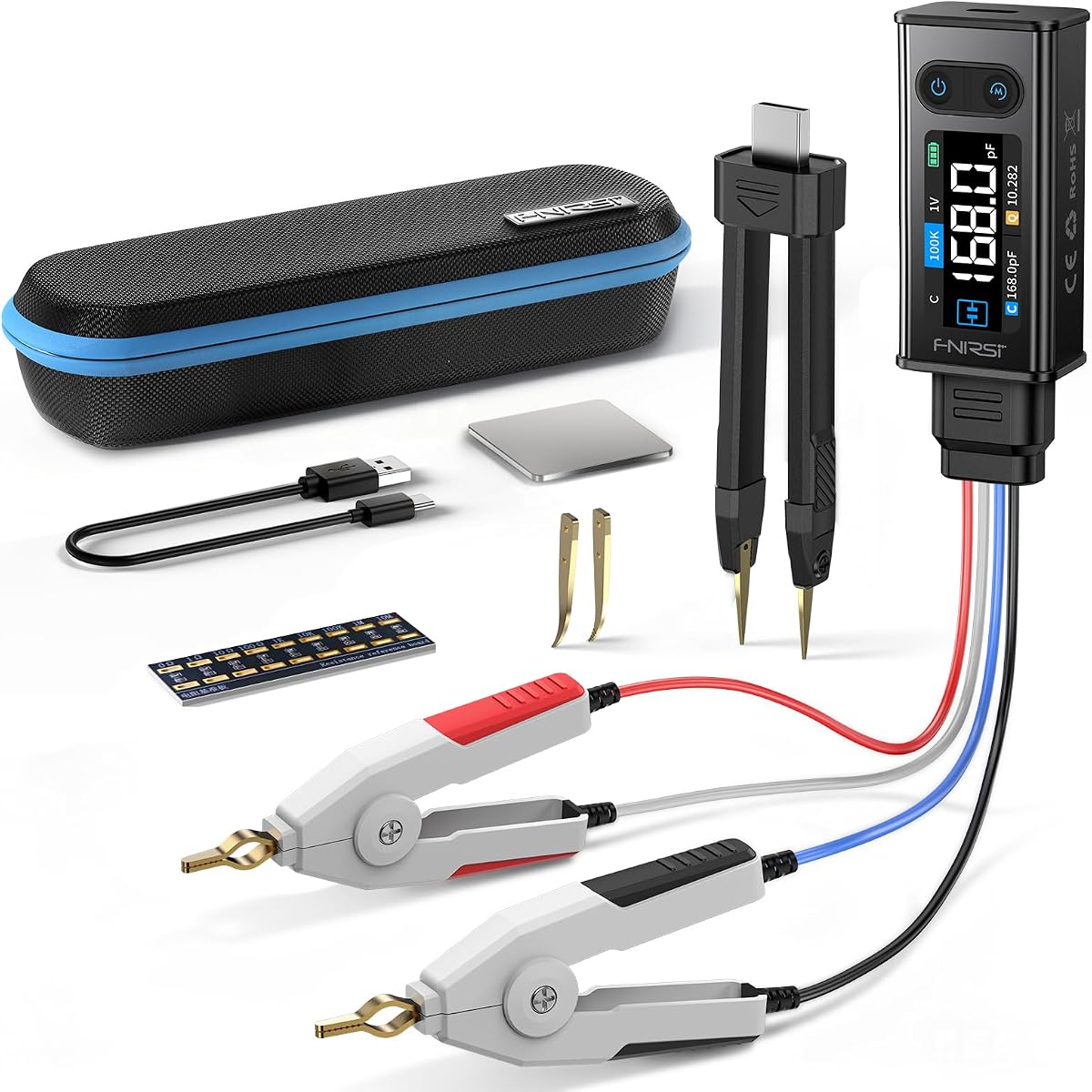
The FNIRSI LCR-ST2 stands out as a versatile choice for technicians who need to test beyond basic low-frequency components. With a maximum frequency of 100kHz, it handles RF applications that standard hobbyist testers cannot. Its auto sorting feature helps identify defective parts quickly during bulk inspection tasks.
We may earn a commission when you buy through this link, at no additional cost to you.
This model offers four RMS test levels which reduce parasitic effects during measurement. The primary and secondary parameter display allows for deeper analysis of component quality. Additionally, the included kit provides hooks and clips alongside the main tweezer, making it adaptable for various component sizes.
While it costs more than entry-level options, the build quality and feature set justify the investment for serious repair work. The magnetic rear stand is a practical touch that keeps the device stable on metal workbenches. Users should note it requires careful handling due to its size.
Ideal for professionals working on automotive or industrial electronics where reliability is key. The ability to switch probe types ensures you can test almost anything on a board. We recommend this for those needing precision across a broad spectrum of component values.
The 100kHz frequency allows testing of components that standard meters miss.
Includes hooks and clips for versatile testing beyond just SMD parts.
We may earn a commission when you buy through this link, at no additional cost to you.
For those starting out or on a tight budget, the Neoteck 10kHz offers incredible value without sacrificing essential features. It supports auto identification and measures all key parameters including ESR. The rotatable display is a standout feature for awkward testing angles.
We may earn a commission when you buy through this link, at no additional cost to you.
Multi-point calibration helps maintain accuracy over time by compensating for parasitic effects. Data storage allows you to save results directly on the device. The inclusion of a spare tweezer tip in the kit adds to its long-term usability value.
The build feels lighter than premium units but remains durable enough for daily use. While it lacks the high-frequency range of expensive models, it covers most common repair needs. The color display is sharp enough for clear reading in typical lighting.
This is the perfect tool for students or hobbyists who need reliable performance without breaking the bank. It simplifies the testing process with auto modes and clear indicators. We highly recommend it for anyone looking for an affordable entry into SMD testing.
The screen rotates 180 degrees for easier viewing from any angle.
Open load and short calibration modes ensure long-term accuracy.
We may earn a commission when you buy through this link, at no additional cost to you.
The Pro1-100KHz is designed for professionals who require the highest level of measurement accuracy available in a handheld device. With a basic accuracy of 0.1% for resistance, it ensures precise readings critical for calibration work. Its wide range covers from nano Henrys to millihenrys seamlessly.
We may earn a commission when you buy through this link, at no additional cost to you.
Five selectable test frequencies allow users to tailor the test signal to the component type. This flexibility is vital for accurate capacitor and inductor measurements. The diode testing function adds utility for checking semiconductors directly on boards.
While it carries a higher price than consumer models, the reliability justifies the cost for lab environments. The straightforward interface minimizes learning curves. Users should expect robust construction that withstands daily professional handling without issues.
Best suited for engineers and repair shops where errors are not an option. The balance of range and precision makes it a powerful asset. We suggest this for those who demand consistent results day after day.
0.1% accuracy sets a new standard for portable testing reliability.
Five frequencies allow testing of complex components accurately.
We may earn a commission when you buy through this link, at no additional cost to you.
The FNIRSI LCR-ST1 is a compact instrument ideal for technicians needing portability. It automatically saves test records so you do not lose data during busy sessions. The dual head options (pointed and hook) provide flexibility for different board layouts.
We may earn a commission when you buy through this link, at no additional cost to you.
With three test frequencies and two voltage options, it handles most standard components effectively. The HD color display is clear, though fixed in position. Data transfer via PC using EXCEL makes reporting straightforward for service centers.
Its fixed screen design might limit visibility in some angles compared to rotatable models. However, the lightweight nature makes it easy to carry in a tool bag. It is a solid middle-ground option for general repair tasks.
This unit is perfect for field service workers who need quick and reliable checks. The automatic data export saves manual recording time. We recommend it for those prioritizing portability alongside decent accuracy.
Automatic test records help track component history efficiently.
Includes both pointed and hook heads for varied component access.
We may earn a commission when you buy through this link, at no additional cost to you.
The Smart Tweezers ST5S is renowned for its high precision and Swiss-made gold-plated test leads. A calibration certificate ensures it meets strict accuracy standards right out of the box. This is a classic choice for those valuing build quality.
We may earn a commission when you buy through this link, at no additional cost to you.
Its OLED display offers high contrast readings even in dim environments. Automatic component identification speeds up testing significantly for SMD parts. The package includes spare leads which ensures you can keep working without delays.
Although it may be priced higher than newer competitors, the brand reputation is strong. The clam shell case protects it well during transport. Users appreciate the lifetime support offered by the manufacturer.
Best for those needing certified accuracy for professional certifications. The included spare leads make it a complete solution. We suggest this if you prefer proven hardware over the latest flashy features.
Includes a calibration certificate for immediate trust in measurements.
Swiss-made 24K gold plated leads reduce resistance and corrosion.
We may earn a commission when you buy through this link, at no additional cost to you.
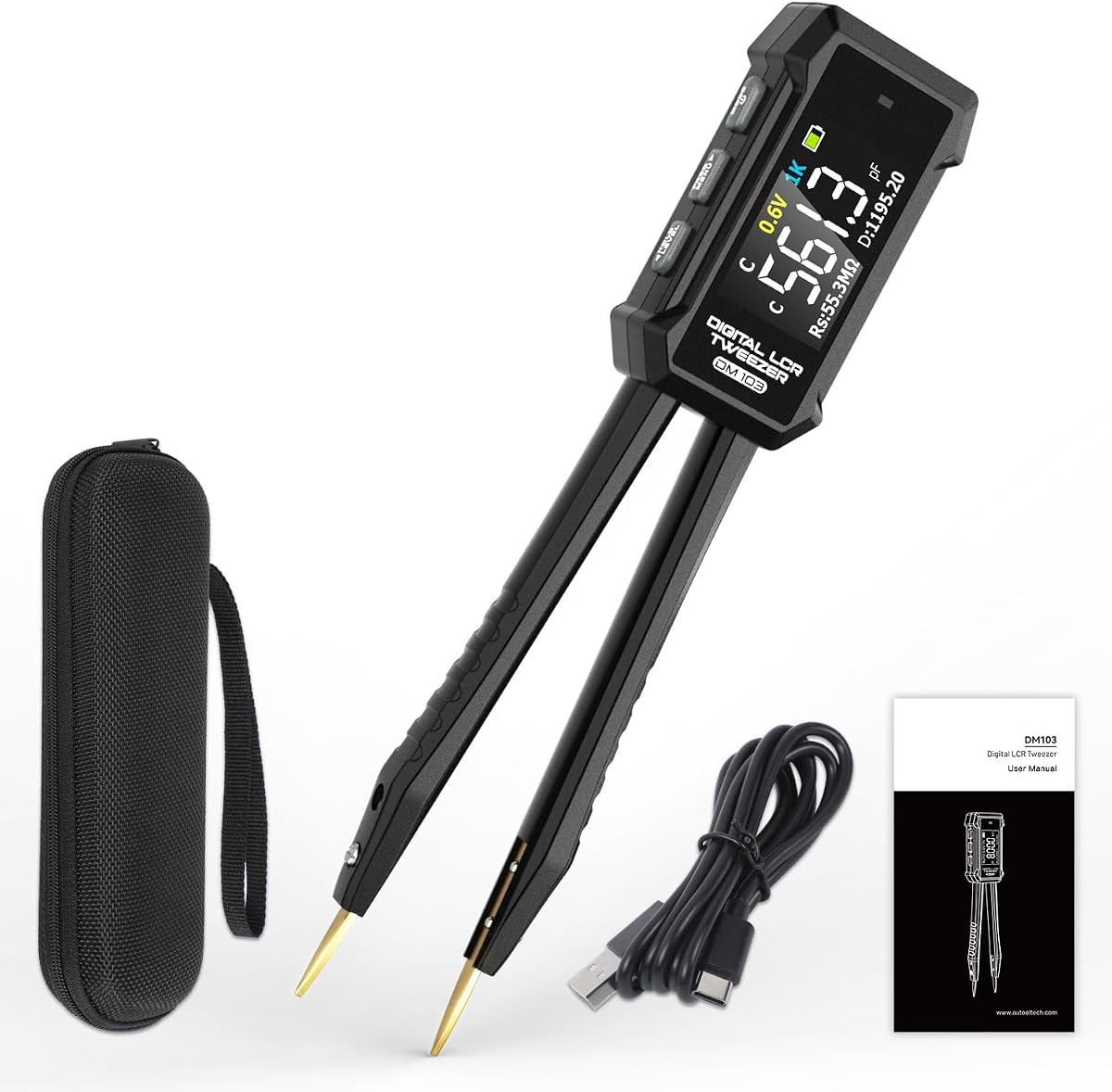
The DM103 distinguishes itself with user-defined calibration capabilities that fix common accuracy drift issues. You can calibrate with standard resistors across ten ranges to maintain precision over time. The adjustable frequency range gives flexibility for different component testing.
We may earn a commission when you buy through this link, at no additional cost to you.
An HD flip OLED screen ensures clear visibility from multiple angles. It displays main and secondary parameters simultaneously, reducing the need for mode switching. The detachable gold-plated tips allow for replacement if worn over time.
Users should be prepared to spend a little time on initial setup for calibration. However, this investment pays off in long-term reliability. The ergonomic design supports one-handed operation during tight board tests.
This is ideal for technicians who need consistent results without relying on factory settings. The high resolution display makes reading small values easier. We recommend it for those who value long-term stability.
User defined calibration combats aging errors for long-term use.
Shows both primary and secondary data to speed up analysis.
We may earn a commission when you buy through this link, at no additional cost to you.
The LT1 Mini LCR Meter offers a unique feature set including a signal generator for various waveforms. This allows for dynamic testing beyond simple component measurement. It supports three test voltages and offers a wide measurement range for capacitors and inductors.
We may earn a commission when you buy through this link, at no additional cost to you.
Automatic screen rotation adjusts the display based on hand preference. This makes it comfortable for both left and right-handed users. The built-in 400mAh battery supports long continuous use without interruptions.
Its compact size makes it easy to carry in a pocket or small tool kit. While the screen is smaller than full-size units, readability remains high. It is perfect for quick diagnostics on the fly.
Best for electronics hobbyists who enjoy building and testing circuits actively. The ability to generate waves adds value for signal verification. We suggest this for users needing extra versatility in a small form.
Includes square sine and triangle wave outputs for signal testing.
Screen rotation adapts to both left and right-handed use.
We may earn a commission when you buy through this link, at no additional cost to you.
The AUTOOL DM103 features an IPS display that offers excellent visibility even in bright conditions. This screen technology reduces eye strain during long repair sessions. Dual parameter display shows primary and secondary data at once for quick analysis.
We may earn a commission when you buy through this link, at no additional cost to you.
It includes firmware upgrades via Type-C connection to ensure long-term performance. Smart auto-recognition speeds up testing by removing manual mode selection. The gold-plated probes ensure stable contact on tiny components.
Users appreciate the clear interface and responsive touch. The build quality is solid and fits comfortably in the hand. While it has standard frequency options, the accuracy remains consistent across modes.
Ideal for workshop users who value visual clarity and modern features. The firmware upgrade path extends the device life. We recommend it for those seeking a modern interface in a tester.
Self-luminous IPS screen ensures high contrast in any light.
Firmware updates via Type-C allow continuous improvement.
We may earn a commission when you buy through this link, at no additional cost to you.
The Global Specialties LCR-58 focuses on essential functionality without extra complexity. It handles DCR measurements efficiently and supports both series and parallel modes. The data hold function allows you to lock readings for later note-taking.
We may earn a commission when you buy through this link, at no additional cost to you.
Overload protection helps prevent damage to the meter during accidental shorts. Auto power-off saves battery when not in use. Its straightforward design means less time learning settings and more time testing.
While it lacks color displays, it remains reliable for basic checks. The build is robust for industrial environments. It suits users who need a no-nonsense tool for routine tasks.
Best for environments where simple, repeatable tests are required daily. The protection features ensure durability. We suggest this for users who prefer reliability over bells and whistles.
Focuses on core DCR functions with high dependability.
Overload protection and auto-off ensure safe and efficient use.
We may earn a commission when you buy through this link, at no additional cost to you.
The Mini Smart Tweezer features a CNC metal housing that offers superior durability compared to plastic models. It supports frequency scanning and adjustable frequencies for flexible testing. The automatic recognition of components simplifies the workflow for busy technicians.
We may earn a commission when you buy through this link, at no additional cost to you.
It includes voltage measurement capabilities adding extra utility. The primary and secondary parameter display aids in quick diagnostics. Users appreciate the robust feel and high reliability score from early adopters.
The metal body adds weight but protects internal components from drops. It is built to withstand rough handling in repair shops. The design balances durability with essential features effectively.
Ideal for workshop environments where tools take a beating daily. The sturdy build ensures longevity over time. We recommend it for users prioritizing physical resilience and performance.
CNC metal housing protects internal components from drops.
Adjustable frequency and voltage measurement expand testing options.
We may earn a commission when you buy through this link, at no additional cost to you.
Choosing the right Lcr Meter Tweezer requires understanding key factors like accuracy, frequency range, and display usability. This guide helps you evaluate these aspects to find a tool that fits your specific electronics repair needs.
Accuracy is critical for professional repairs where component values determine circuit function. Look for units with 0.1% to 0.5% basic accuracy for reliable results. High precision ensures you can distinguish between similar component values effectively.
Higher accuracy models are essential for calibrating circuits or testing sensitive equipment.
Different components require different test frequencies for accurate reading. Standard hobbyists usually need 10kHz, but RF work demands up to 100kHz. Select a range that covers your typical component types to avoid errors.
Check the max frequency before buying to ensure it fits your workflow requirements.
A clear display is necessary for reading small values during long sessions. Color OLED or IPS screens reduce eye strain and improve contrast. Rotatable screens add flexibility for awkward angles on PCBs.
Prioritize displays that remain legible in various lighting conditions.
Auto identification features save time by removing manual mode switching. Look for units with clear button layouts and intuitive menus. Ergonomic designs reduce hand fatigue during repeated testing.
Choose models that minimize setup steps for faster daily workflow.
Field technicians need lightweight tools that fit in tool bags easily. Consider the physical dimensions and whether the case included protects well. Battery life should support a full workday without recharge.
Balance the weight of the unit against its feature set for comfort.
Recording measurements can help in troubleshooting complex boards. Models with USB export or internal memory allow you to save test records. This helps track component health over time.
Data storage features add significant value for professional reporting.
Your tool will face drops and heat during repairs. Metal housings provide better protection than plastic shells. Check for overload protection to prevent internal damage.
Invest in robust build quality to extend the lifespan of the device.
Prices vary widely from entry-level to professional grades. Determine if you need premium accuracy or if standard features suffice. Budget models often offer 90% of performance for less cost.
Match your spending to your actual need to avoid overspending.
To get accurate results, calibrate your device before use if it supports this feature. Remove any battery or power source from the circuit you are testing to avoid false readings. Use the correct test probes to match the component size.
Store the unit in a dry place to prevent moisture damage. Keep the test tips clean to maintain good contact. Use a soft cloth to wipe down the display and body after each session.
Update firmware regularly if your model supports it for improved features. Recharge the battery before it is completely depleted to maintain health. Follow manufacturer guidelines for storage temperature limits.
An LCR Meter Tweezer is a handheld device that measures inductance, capacitance, and resistance. It combines tweezer tips with measurement circuitry for easy testing. It is designed to simplify component verification on PCBs.
You can test components in-circuit but results may be affected by nearby parts. Ideally remove the component for the most accurate reading. Check the manual for specific in-circuit testing capabilities.
Some models require periodic calibration to maintain accuracy over time. Others come pre-calibrated from the factory. Check if your unit supports user calibration for long-term precision.
Choose 10kHz for standard capacitors and resistors used in general electronics. Select 100kHz if you work with RF circuits or specific components. The higher frequency covers more demanding applications.
Yes, they are specifically designed for Surface Mount Devices. The tips are fine enough to grip small packages securely. They eliminate the need for bulky test leads.
Most models offer 4 to 8 hours of continuous use. Battery life depends on display brightness and frequency of use. Look for Type-C charging for convenient recharging.
Many models include USB storage or Excel export features. This allows you to transfer test results to a PC for analysis. Check the product details for data connectivity options.
We have reviewed ten top Lcr Meter Tweezer models ranging from budget to premium. Each unit offers unique strengths like high accuracy, display quality, or durability. Your best choice depends on your specific testing needs and frequency requirements.
Prioritize accuracy and frequency if you work on complex circuits. For general repairs, focus on usability and budget-friendly options. Ensure the unit matches the complexity of your daily tasks.
Always verify current prices and availability before buying. Prices can change, and new models may appear over time. Regularly check for firmware updates to keep your tool performing at its best.