
Vogzone for MCX4121A-ACAT ConnectX-4 Lx 25GbE
4.7Editor score
Mellanox ConnectX-4 Lx
Dual SFP28 Ports
RoCE and RDMA Support
Compare the top 25GbE Network Cards for 2026 including Intel and Mellanox models to find the best networking upgrade for your server.
High-speed networking is essential for modern data centers and enterprise environments. Choosing the right 25GbE Network Cards ensures your infrastructure handles demanding workloads efficiently and reliably without bottlenecks.
We evaluated ten leading models based on controller performance, port configuration, and software compatibility. This guide helps you select the ideal adapter for your specific server architecture and operational requirements quickly.
Each recommendation highlights key strengths and potential limitations to inform your decision. Please note that availability and pricing fluctuate frequently so verify current details before finalizing your purchase today.
4.7Editor score


5.0Editor score
This side-by-side comparison highlights key specifications across all ten products to help you quickly identify the most suitable networking solution for your server or workstation environment.


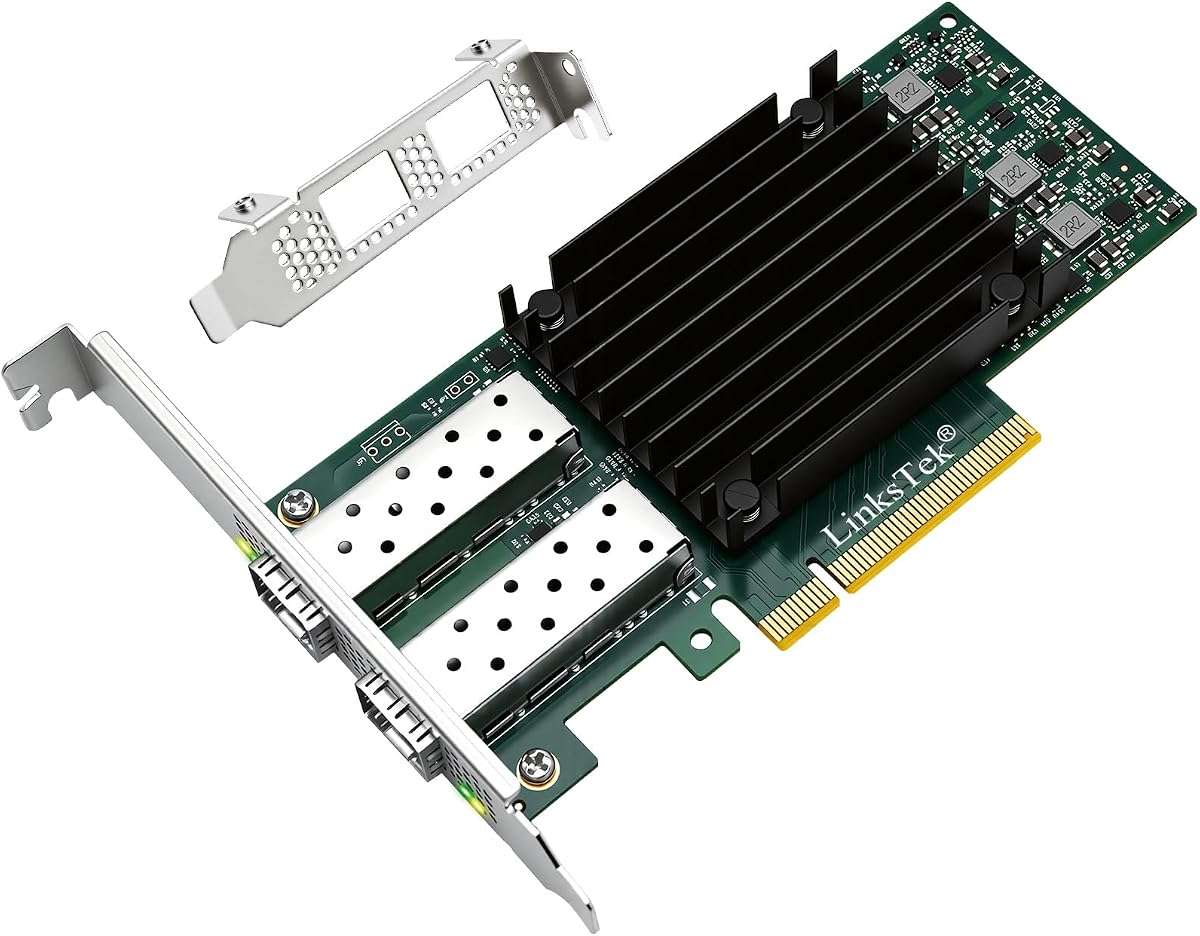


The QXG-25G2SF-E810 stands out as a robust solution for enterprise networks requiring reliable data transfer. It features the Intel E810 controller which provides stable performance and extensive compatibility across different operating systems.
We may earn a commission when you buy through this link, at no additional cost to you.
Key strengths include its dual 25GbE ports that support link aggregation for up to 50 Gbps speeds. Forward Error Correction ensures data integrity during high volume transfers which is critical for business operations.
While the brand may be less familiar than giants like Intel or Mellanox the hardware specifications are competitive. The inclusion of port trunking and broad OS support makes it a versatile choice for various setups.
This card is ideal for system administrators needing a balance of performance and reliability. It delivers on its promise of enterprise-level networking without requiring excessive configuration effort.
Forward Error Correction technology ensures that data packets arrive intact reducing the need for retransmission in critical network environments.
Port trunking allows administrators to combine bandwidth from both ports creating a single high-speed logical interface for faster file sharing.
We may earn a commission when you buy through this link, at no additional cost to you.
The Synology E25G30-F2 adapter is purpose-built specifically for Synology NAS systems ensuring seamless integration. It enables higher simultaneous throughput which is vital for media servers and backup appliances.
We may earn a commission when you buy through this link, at no additional cost to you.
Key strengths include its dedicated optimization for DSM which simplifies setup and management. The five year warranty reflects confidence in the hardware durability and long term reliability.
However the adapter is restricted to Synology hardware limiting its use in general server environments. Users must ensure their firmware version meets the minimum requirement for proper functionality.
This product is best suited for Synology users needing a native upgrade path. It offers reliable performance and official support which reduces troubleshooting time significantly.
Designed specifically for DSM the adapter integrates smoothly with Synology tools allowing for easy configuration of network settings.
Port failover and load balancing features ensure that network connections remain active even if one port experiences failure.
We may earn a commission when you buy through this link, at no additional cost to you.
The Vogzone MCX4121A-ACAT offers an affordable entry point into 25GbE networking using genuine Mellanox hardware. It delivers high performance at a fraction of the cost of branded alternatives.
We may earn a commission when you buy through this link, at no additional cost to you.
Key strengths include support for DPDK and SR-IOV which are essential for virtualization and cloud environments. The wide range of supported operating systems makes it versatile for diverse infrastructures.
While packaging and documentation may be less polished than top tier brands the core functionality remains robust. It is a cost-effective solution for users prioritizing hardware performance over branding.
This card is ideal for budget-conscious admins or developers needing high bandwidth. It provides excellent value while maintaining compatibility with standard enterprise networking protocols.
By offering genuine Mellanox controllers at a lower price point this card provides significant savings for large deployments.
Support for SR-IOV allows efficient management of I/O resources across multiple virtual machines improving server consolidation.
We may earn a commission when you buy through this link, at no additional cost to you.
The 10Gtek 25G Ethernet card leverages the latest PCIe 4.0 standard for maximum data throughput. With a perfect user rating it has gained trust among early adopters and IT professionals.
We may earn a commission when you buy through this link, at no additional cost to you.
Key strengths include full support for Windows 11 and recent server operating systems. The Intel E810 controller ensures efficient packet processing and advanced offloading capabilities.
Although it lacks Mac compatibility the card excels in standard x86 environments. The inclusion of low profile brackets makes it suitable for compact servers and workstations.
This card is a strong choice for new builds utilizing PCIe 4.0 slots. It delivers high performance and reliability without the premium cost of name brand alternatives.
Utilizing PCIe 4.0 ensures that the card can handle high bandwidth demands without bottlenecking the system bus.
Compatibility with recent Windows and Linux versions ensures smooth integration into modern enterprise server environments.
We may earn a commission when you buy through this link, at no additional cost to you.
The CX4121A adapter uses a Mellanox controller to deliver reliable high-speed connectivity for storage and virtualization. Its high user rating indicates consistent performance across various configurations.
We may earn a commission when you buy through this link, at no additional cost to you.
Key strengths include support for overlay networks like NVGRE and VXLAN which are critical for modern cloud architectures. RDMA capabilities significantly reduce CPU overhead during data transfers.
While transceivers are not included the card supports standard MSA compliant optics for flexibility. Auto-negotiation ensures compatibility with older PCIe slots if needed.
This adapter is ideal for virtualized environments requiring low latency. It balances performance features with affordability making it a smart choice for scalable storage systems.
Support for advanced overlay networks enables efficient management of virtualized traffic in complex cloud deployments.
RDMA over RoCE technology allows data to move directly between memory without taxing the CPU.
We may earn a commission when you buy through this link, at no additional cost to you.
The Intel XXV710-DA2 is a trusted name in server networking offering consistent performance and robust driver support. It is designed to handle demanding virtualization and cloud deployment tasks efficiently.
We may earn a commission when you buy through this link, at no additional cost to you.
Key strengths include hardware based application traffic steering which optimizes packet processing for specific workloads. Dynamic Device Personalization enhances efficiency for network functions virtualization.
While newer controllers exist this model remains reliable for standard enterprise use. The perfect user rating suggests high satisfaction with its stability and performance over time.
This adapter is best for organizations prioritizing vendor support and stability. It provides a solid foundation for mission critical network infrastructure without unnecessary complexity.
Flow Director technology allows precise control over how network packets are processed improving overall system efficiency.
Designed with NFV in mind the adapter includes offloads that reduce CPU usage in virtualized environments.
We may earn a commission when you buy through this link, at no additional cost to you.
The GLOTRENDS ST7400 utilizes the Open Compute Project 3.0 standard which is popular in modern data centers. It offers a compact solution for servers designed to accept OCP mezzanine cards.
We may earn a commission when you buy through this link, at no additional cost to you.
Key strengths include the use of the Intel E810 controller ensuring high performance and low latency. Traffic management features allow for better resource allocation in congested networks.
Installation requires a compatible server chassis with OCP slots which limits its general use. This makes it a specialized choice rather than a universal solution for all servers.
This card is ideal for hyperscale or cloud providers using OCP hardware. It delivers excellent performance in environments designed specifically for this modular interface type.
Adhering to OCP 3.0 standards ensures compatibility with a wide range of open source server architectures.
Using the E810 controller provides access to the latest features in network traffic management and security.
We may earn a commission when you buy through this link, at no additional cost to you.
The Sonnet Twin25G T5 adapter is the premier choice for professionals using Thunderbolt 5 systems. It brings enterprise grade networking directly to high end workstations without needing internal slots.
We may earn a commission when you buy through this link, at no additional cost to you.
Key strengths include the inclusion of SFP28 transceivers which saves time and money during deployment. It supports both 25GbE and 10GbE allowing seamless integration into existing networks.
While expensive the cost includes high quality transceivers and cables making it a complete kit. The dual Thunderbolt ports allow you to connect peripherals while using the adapter.
This adapter is ideal for video editors and designers needing massive bandwidth. It bridges the gap between workstations and data centers effectively with minimal setup.
Inclusion of transceivers and cables allows immediate deployment without the need for additional hardware purchases.
Optimized for Thunderbolt 5 it delivers the bandwidth required for 4K and 8K media production workflows.
We may earn a commission when you buy through this link, at no additional cost to you.
The Sonnet Twin25G PCIe provides a reliable way to upgrade desktop and workstation networking with optical ports. It is particularly valuable for Mac users needing high-speed external or internal connectivity.
We may earn a commission when you buy through this link, at no additional cost to you.
Key strengths include the inclusion of SFP28 transceivers which ensures immediate usability. Backward compatibility with 10GbE allows for gradual infrastructure upgrades without replacing existing switches.
Users should verify current macOS compatibility as updates may affect functionality. Despite this it remains one of the few options that support Mac architectures effectively.
This card is ideal for professionals using Mac Pro or Thunderbolt expansion systems. It offers a professional grade networking solution that integrates well with creative work environments.
Designed to work with Mac and Windows systems it addresses a niche market often overlooked by generic adapters.
Supporting 10GbE standards ensures you can connect to older network hardware while preparing for future speeds.
We may earn a commission when you buy through this link, at no additional cost to you.
The Mellanox MCX512A-ACAT features the ConnectX-5 controller which has been a staple in data centers for years. It offers a proven solution for environments requiring stable 25GbE connectivity.
We may earn a commission when you buy through this link, at no additional cost to you.
Key strengths include its support for advanced offloads that reduce CPU overhead. It remains compatible with a wide range of virtualization platforms and operating systems.
As an older generation card it may lack some newer features found in recent models. However for standard workloads it continues to deliver reliable performance with proven drivers.
This card is ideal for budget conscious buyers needing Mellanox quality. It provides a solid backbone for networks that do not require the absolute latest technology.
The ConnectX-5 architecture is well-tested and supported ensuring consistent operation over long periods.
Dual 25GbE ports provide the bandwidth necessary for modern server applications and storage clusters.
We may earn a commission when you buy through this link, at no additional cost to you.
Selecting the right 25GbE Network Card requires understanding several technical factors that impact performance and compatibility with your existing infrastructure.
The network controller inside the card dictates performance and software support. Intel E810 and Mellanox ConnectX-4 or ConnectX-5 are common choices offering distinct driver ecosystems.
Always check if your operating system supports the specific controller model before purchasing to ensure driver availability and functionality.
Most 25GbE Network Cards require a PCIe x8 slot to utilize full bandwidth. While some operate in x4 slots performance may be limited depending on the lane configuration.
Verify your motherboard has an available x8 slot that matches the card generation such as PCIe 3.0 or 4.0.
Look for dual SFP28 ports which allow flexibility using fiber optics or DAC cables. Ensure the card supports the physical medium you plan to use for connectivity.
Some adapters include transceivers while others require you to purchase them separately so check the product details carefully.
Different cards support different operating systems ranging from Windows and Linux to VMware ESXi. Confirm the driver list includes your current or planned OS version.
Mac users should prioritize specific adapters that officially support macOS to avoid compatibility issues with drivers.
If running virtualization or storage clusters look for RDMA support like RoCE or iWARP. These features reduce CPU load during high speed data transfers significantly.
Offloading capabilities help maintain system performance when network throughput is high ensuring smooth operation.
Check if the card includes a low profile or full height bracket to fit your case. Servers often require specific mounting hardware that standard cards might not include.
Selecting the correct form factor prevents physical installation issues in compact workstations or blade servers.
Established brands often provide better driver support and longer warranties. While third-party cards offer value ensure they have a reliable support channel for driver updates.
A longer warranty period can be a sign of the manufacturer confidence in the hardware quality and longevity.
Install the card into an available PCIe slot and secure it with the provided bracket. Connect the appropriate SFP28 transceivers or DAC cables to ensure a physical link.
Install the latest drivers from the vendor website and configure port settings in your operating system. Enable features like VLAN tagging or link aggregation as needed.
Regularly update firmware to maintain compatibility with switches and security standards. Avoid physical shocks and keep the internal environment cool to ensure long term reliability.
Yes most cards require SFP28 compatible DAC cables or fiber optic cables with transceivers. The card port type determines which cables work so check compatibility before purchase.
Most 25GbE Network Cards support auto-negotiation allowing them to connect to 10GbE switches. You may lose the full 25GbE speed but connectivity remains functional.
Driver support varies but most 25GbE Network Cards work on Windows 10 or 11 Home editions. Always check the specific driver list on the vendor website for confirmation.
No standard PCIe 25GbE Network Cards draw power directly from the motherboard slot. They do not need additional power cables unlike some high power GPU or storage cards.
Ideally you should use a PCIe 3.0 x8 or 4.0 x8 slot to avoid bottlenecks. Older slots may limit performance depending on the lane count available.
Check your server specifications for OCP 3.0 compliance. Standard servers usually use PCIe slots while OCP cards fit in specific mezzanine slots in newer chassis.
We have reviewed ten distinct models ranging from budget options to premium solutions. The QXG-25G2SF-E810 offers strong value while Sonnet provides high end options for Mac users.
Prioritize controller compatibility and slot requirements to ensure your upgrade works smoothly. RDMA support is a key factor if you run virtualization or heavy storage workloads.
Prices and availability change frequently so verify current listings on trusted retailers. Choosing the right card ensures your network stays fast and reliable for years to come.