
waveshare Hailo-8 M.2 AI Accelerator Module
4.6Editor score
26 TOPS AI processing power
Low 2.5W power consumption
Supports multiple AI frameworks
Explore the top M2 Accelerator Cards for AI and ML workloads. This guide compares performance, compatibility, and efficiency to help you choose the right edge
Selecting the right M2 Accelerator Cards is crucial for deploying efficient AI workloads on edge devices. These cards provide dedicated processing power for machine learning tasks without overwhelming your main CPU resources.
We evaluated ten leading models based on their inference speed, power efficiency, software support, and hardware compatibility. Each entry offers unique strengths for developers building computer vision or classification systems today.
Every pick below highlights key specifications and real-world use cases. Note that availability and pricing vary by region and time, so verify details before finalizing your purchase decision.
4.6Editor score

4.3Editor score

5.0Editor score
This table provides a quick side-by-side view of each card's key capabilities. Use it to compare interface types, throughput numbers, and system compatibility across the entire list.
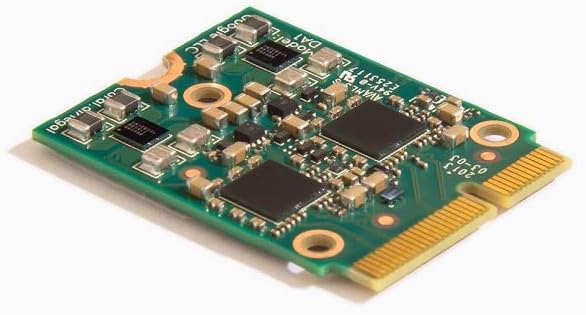


The MX3 M.2 AI Accelerator stands out for its ability to handle demanding AI computer vision tasks efficiently. With a 4.3 star rating, it is praised for balancing high performance with low power use.
We may earn a commission when you buy through this link, at no additional cost to you.
Developers love its flexible integration via M.2 M-key and robust SDK support. It runs seamlessly on Linux systems and even pairs well with Raspberry Pi 5 using a HAT adapter.
While it is limited to Linux and specific slots, these constraints are acceptable for edge AI deployments where power efficiency matters. The SDK simplifies model deployment significantly.
Buy this if you need a reliable Linux-based accelerator for vision tasks. It is an ideal choice for embedded developers prioritizing efficiency and software support.
The MX3 delivers exceptional throughput for computer vision models, ensuring real-time processing capabilities without excessive thermal output.
A comprehensive SDK reduces development time, allowing engineers to deploy models faster and manage resources efficiently across Linux environments.
We may earn a commission when you buy through this link, at no additional cost to you.
This card offers dual Edge TPUs in a compact M.2 2230 package, delivering 8 TOPS peak performance. Rated 4.1 stars, it is ideal for projects needing scalable inference without extra PCIe slots.
We may earn a commission when you buy through this link, at no additional cost to you.
With 2 TOPS per watt efficiency and support for Debian Linux, it fits well in energy-conscious edge devices. It works seamlessly with TensorFlow Lite and AutoML Vision Edge for rapid deployment.
The E-key requirement and PCIe Gen2 x1 interface can limit bandwidth for some data-heavy tasks. However, for most vision classification needs, this trade-off is minimal.
Choose this if you need to scale ML workloads on existing Debian systems. It is a solid pick for developers balancing cost, efficiency, and performance.
Two Edge TPUs allow simultaneous processing of multiple streams, increasing throughput for complex inference scenarios without increasing system size.
The high performance per watt ratio ensures minimal heat generation, making it suitable for enclosed or passive-cooled edge device environments.
We may earn a commission when you buy through this link, at no additional cost to you.
With a perfect 5.0 star rating, this Coral module is praised for its efficiency and ease of use. It delivers 4 TOPS with just 0.5 watts per TOPS, ideal for battery-powered devices.
We may earn a commission when you buy through this link, at no additional cost to you.
It integrates seamlessly with Debian Linux and supports TensorFlow Lite for quick model compilation. The ability to compile AutoML Vision models locally saves significant development time and complexity.
Though limited to Debian and modest 4 TOPS throughput, the power savings and simplicity make it a top pick for lightweight vision tasks. It balances performance and resource usage effectively.
Buy this if you prioritize efficiency and Debian support. It is an excellent choice for mobile or embedded projects needing low power AI inferencing.
Delivering high operations per watt allows extended runtime on batteries, making it ideal for remote or mobile edge deployments.
Built-in support for TensorFlow Lite and AutoML simplifies the workflow from model design to edge device implementation.
We may earn a commission when you buy through this link, at no additional cost to you.
This card enhances NAS performance with two M.2 NVMe slots and a 10GbE port. Rated 4.4 stars, it is a favorite among QNAP users needing high-speed storage caching and networking.
We may earn a commission when you buy through this link, at no additional cost to you.
It supports PCIe Gen3 x8 and works with Windows, Linux, and QNAP OS. The included low-profile bracket ensures fit in various chassis while maximizing data transfer efficiency.
While not an AI accelerator, it provides the high-speed storage infrastructure needed for AI datasets. It is best suited for storage expansion rather than dedicated machine learning.
Buy this if you need to upgrade NAS caching or networking. It is the top pick for QNAP users prioritizing storage speed and multi-OS support.
The dual M.2 slots allow for rapid data caching, significantly reducing latency in NAS systems handling large datasets.
The 10GbE port ensures fast data transfer to the network, eliminating bottlenecks when working with large files or backups.
We may earn a commission when you buy through this link, at no additional cost to you.
This PCIe Gen5 card offers four M.2 NVMe ports with dedicated lanes, ideal for high-throughput storage. It supports mainstream and ARM platforms, making it versatile for modern workstations and servers.
We may earn a commission when you buy through this link, at no additional cost to you.
While currently limited by available Gen5 motherboards, it ensures future compatibility. The dedicated x4 lanes per port prevent bottlenecks, ensuring stable transfer speeds across all four drives.
Its higher power draw may require robust cooling or power supplies. However, for users prioritizing bandwidth and longevity, these factors are outweighed by performance.
Buy this if you are building a high-end workstation or server. It is the best choice for those needing maximum storage speed and future compatibility.
PCIe Gen5 support ensures that the card keeps pace with the latest NVMe SSD technologies for unmatched storage performance.
Supporting multiple M.2 sizes from 2242 to 2280 gives users the flexibility to use various SSD form factors efficiently.
We may earn a commission when you buy through this link, at no additional cost to you.
This adapter transforms your system into a dual-TPU workstation for faster object detection and analytics. Rated 4.4 stars, it maximizes existing hardware investment by allowing two Coral cards in one slot.
We may earn a commission when you buy through this link, at no additional cost to you.
It is engineered with future-proof design principles and developer-friendly features for TensorFlow Lite and computer vision applications. The integrated heatsink helps manage thermal output effectively.
Since it requires separate Coral cards and uses PCIe Gen2, total throughput depends on the cards installed. This trade-off is acceptable for cost-effective scaling without full system replacement.
Buy this if you want to scale AI workloads cheaply. It is the ideal pick for developers needing multi-TPU setups on existing PCIe slots.
Supporting two TPU modules allows scaling inference capacity by simply adding more cards without replacing the motherboard.
Built-in heatsink ensures the adapter stays cool under load, maintaining stability during extended analytics sessions.
We may earn a commission when you buy through this link, at no additional cost to you.
This card supports up to four M.2 drives with server-grade PCB quality and RAID functions. Rated 4.2 stars, it is designed for smooth data transfers up to 512 Gbps across Intel and AMD platforms.
We may earn a commission when you buy through this link, at no additional cost to you.
Active cooling via a dedicated fan and thermal pads prevents throttling, ensuring reliability under heavy loads. The 6-pin power connector provides stable voltage for high-performance NVMe drives.
While RAID configuration adds complexity, the ability to create bootable arrays enhances performance significantly. This makes it a top choice for workstations requiring high-speed multi-drive access.
Buy this if you need high-bandwidth storage with RAID. It is the best option for users prioritizing throughput and multi-drive reliability.
Support for RAID arrays allows combining multiple drives for enhanced speed or redundancy, critical for data-intensive workflows.
The active fan reduces temperatures during heavy transfers, maintaining consistent performance without thermal throttling.
We may earn a commission when you buy through this link, at no additional cost to you.
Powered by the Hailo-8 processor, this module delivers 26 TOPS with just 2.5W power draw. Rated 4.6 stars, it offers scalable, low-latency inference for multi-stream and multi-model edge tasks.
We may earn a commission when you buy through this link, at no additional cost to you.
It supports TensorFlow, ONNX, and PyTorch, running on Linux and Windows. Compatible with Raspberry Pi 5 and industrial temp ranges, it is highly versatile for complex edge AI projects.
As a module-only product, it may require additional adapters for some boards. However, the performance and framework flexibility make this trade-off worthwhile for advanced deployments.
Buy this if you need the highest edge AI throughput. It is the premium pick for developers prioritizing raw performance and framework compatibility.
Scalable architecture enables simultaneous processing of multiple streams, allowing complex multi-model pipelines on a single board.
Native support for both Linux and Windows frameworks reduces porting time, making deployment more flexible across diverse systems.
We may earn a commission when you buy through this link, at no additional cost to you.
This card integrates Edge TPU for 4 TOPS ML inference with broad OS support. Rated 4.2 stars, it is reliable for embedded tasks needing both Linux and Windows compatibility in one module.
We may earn a commission when you buy through this link, at no additional cost to you.
Designed with low power and industrial-grade reliability, it withstands harsh environments. The A+E key interface allows easy integration into laptops and other existing systems.
While not for heavy workloads, it is ideal for lightweight classification and detection tasks. The OS flexibility and rugged build make it a versatile choice for embedded applications.
Buy this if you need Windows and Linux support. It is the best pick for developers requiring broad compatibility in industrial or embedded settings.
Compatibility with both Linux and Windows allows developers to use the same accelerator across different project environments seamlessly.
Industrial-grade reliability ensures stable performance in demanding conditions, making it suitable for outdoor or factory deployments.
We may earn a commission when you buy through this link, at no additional cost to you.
This adapter is designed exclusively for Coral M.2 modules, maximizing dual TPU performance. Rated 5.0 stars, it ensures stable PCIe Gen2 bandwidth and includes a stainless steel mounting screw.
We may earn a commission when you buy through this link, at no additional cost to you.
It fits standard B-key or M-key slots, providing vibration-resistant fixation. The design explicitly excludes SATA and CM4 compatibility, preventing common buyer mistakes.
While limited to PCIe Gen2 and specific boards, its reliability and ease of use make it a top budget pick. It offers the most straightforward way to dualize Coral performance.
Buy this if you need dual TPU performance cheaply. It is the best budget option for users prioritizing simple, stable integration with existing hardware.
The included stainless steel screw ensures the card stays secure, preventing connection issues caused by vibration or movement.
Explicitly noting incompatible devices like CM4 enclosures helps users avoid purchasing mistakes, saving time and money.
We may earn a commission when you buy through this link, at no additional cost to you.
Choosing the right M2 Accelerator Card requires balancing performance, power, and system compatibility. Here are the key factors to consider for your project.
Look for cards offering sufficient Trillions of Operations Per Second (TOPS) for your intended workload. Higher TOPS generally mean faster inference for models like MobileNet or YOLO. Assess whether your model needs real-time processing or if slower speeds are acceptable.
Prioritize models with higher TOPS if latency is critical for your application.
Power draw matters especially in battery-powered or passive-cooled systems. Many modern cards offer 2 TOPS per watt or better, which helps sustain long runtimes without overheating. Check thermal requirements to ensure your case can dissipate heat.
Select low-power options if your device has limited power supply or strict thermal constraints.
Ensure the card matches your motherboard's M.2 key type and slot availability. Some cards require specific PCIe keys like E-key or M-key. Also confirm OS support, as many edge cards are Linux-only or Debian-specific.
Verify your system supports the card before ordering to avoid incompatibility issues.
Comprehensive SDKs and framework support (TensorFlow, PyTorch, ONNX) simplify development. Tools like AutoML Vision Edge reduce the time needed to train and deploy models. Without good documentation, setup can be a significant hurdle.
Choose cards with active community resources and clear SDK guides.
Cards come in 2230, 2242, or 2280 sizes. Smaller cards fit in embedded devices but may have thermal limits. Larger cards allow better cooling but might not fit compact enclosures. Consider the physical dimensions of your target device.
Match the form factor to your hardware's physical constraints and thermal capabilities.
PCIe Gen2, Gen3, or Gen5 interfaces determine data transfer speeds. For heavy video streams, higher bandwidth ensures no bottlenecks. However, for basic classification, Gen2 might suffice. Consider your expected throughput needs.
Opt for higher bandwidth interfaces if handling large datasets or video feeds.
Some adapters allow multiple TPU cards in a single slot for scalable inference. This is useful for projects needing to increase capacity without replacing hardware. Check if you need single or dual TPU configurations.
Consider adapters if you expect to scale up your AI workloads later.
Industrial-grade cards often support wider temperature ranges (-40°C to 85°C), making them suitable for outdoor or factory environments. Robust PCBs and proper cooling features like heatsinks improve longevity and stability in tough conditions.
Prioritize industrial reliability if operating outside standard office environments.
Install the card into the appropriate M.2 slot and secure it with screws. Ensure the system supports the PCIe interface and key type. Boot into the OS and verify the card is detected via system commands.
Install the provided SDK and necessary drivers. Configure your model using supported frameworks like TensorFlow Lite or ONNX. Compile the model for the accelerator and test performance using benchmark tools.
Keep the system cool with adequate airflow or fans. Regularly check for SDK updates and monitor thermal usage to prevent throttling. Clean dust from heatsinks to maintain efficiency.
No. Cards require specific M.2 key types and slot sizes. Verify if your motherboard has the correct slot and PCIe lane support. Some cards only work with Linux-based systems.
Some cards like Coral M.2 Accelerator A+E Key and waveshare Hailo-8 support Windows 10. Others are Debian or Linux-only. Check the product page for OS compatibility details.
No. M2 Accelerator Cards are specialized for machine learning inference. They are not meant for gaming or graphics rendering. Use them only for AI workloads like classification or detection.
TPU (Tensor Processing Unit) is Google's architecture for TensorFlow. NPU (Neural Processing Unit) is generic. Both accelerate AI inference but differ in supported frameworks and tools. Choose based on your model framework.
Most M.2 cards draw power directly from the slot. High-performance PCIe expansion cards may require 6-pin connectors. Check the power requirements for each model before installation.
Yes, with adapter cards or multiple PCIe slots. Some adapters allow dual TPU setups in one slot. Ensure your motherboard has enough PCIe lanes and slots to support multiple cards.
Usually not. You often need to install drivers and compile models. Some Linux systems auto-detect the cards but full functionality requires SDK configuration and model compilation.
They are ideal for AI vision tasks like object detection or image classification on edge devices. Perfect for Raspberry Pi projects, smart cameras, or industrial automation using AI.
We reviewed ten top M2 Accelerator Cards with unique strengths for different edge AI needs. From high-power Hailo-8 modules to budget-friendly Coral adapters, each option fits specific project requirements.
Prioritize TOPS, OS compatibility, and power efficiency when selecting a card. Match the card to your hardware constraints and workflow needs to avoid compatibility issues and wasted resources.
Verify current availability and pricing before buying as details can change. Choose the model that aligns best with your specific deployment goals and budget constraints.