
22MP Film & Slide Scanner with 5 LCD LCD
4.3Editor score
Affordable price point option
HDMI and USB output
Built in memory storage
This guide compares the top 35mm slide scanners for digitizing film and slides with features like LCD screens and standalone operation for easy archiving.
Preserving old memories is easier than ever with modern 35mm slide scanners. These devices convert physical film and slides into digital files quickly. A good scanner offers high resolution and easy editing tools for perfect results.
We compared ten top models based on screen size, scanning speed, and film compatibility. Our analysis focuses on standalone operation and user-friendly interfaces. This ensures you can digitize collections without needing a computer setup.
Each pick highlights unique strengths like touch screens or batch scanning capabilities. You will find options for every budget and technical skill level. Please note that availability and terms may change over time.
4.3Editor score
4.3Editor score

5.0Editor score
This table provides a side by side view of key specifications for all ten scanners. It helps you compare screen sizes, resolution capabilities, and supported film formats at a glance.





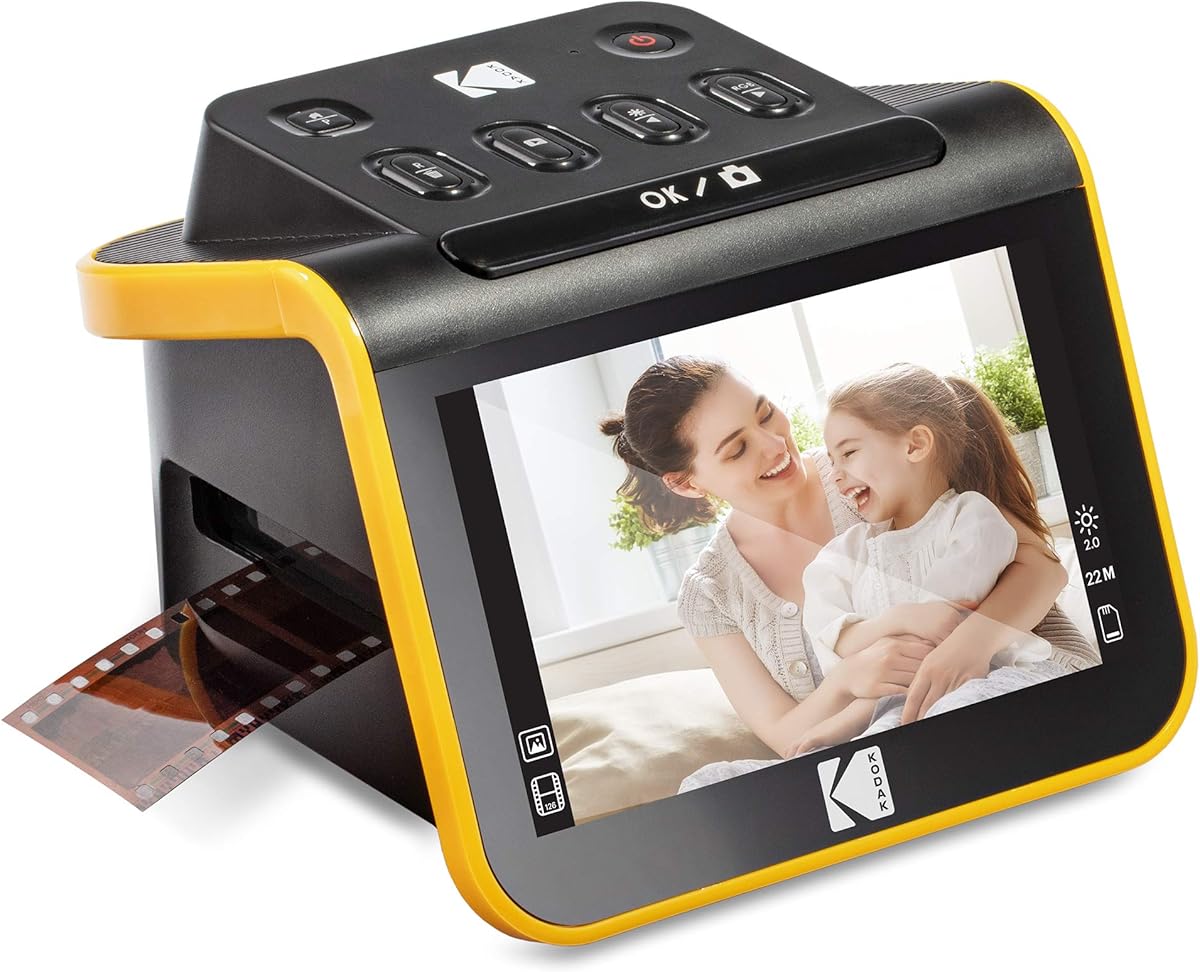
The KODAK Slide N Scan stands out as a top choice for digitizing old memories. With a strong rating and robust features it offers high resolution scanning up to 22MP. The device is designed for ease of use allowing anyone to convert negatives and slides quickly.
We may earn a commission when you buy through this link, at no additional cost to you.
Its standout feature is the large 5 inch LCD display which lets you preview and edit images directly on the device. You can adjust brightness and color without needing a computer. The quick feeding tray technology makes loading film simple and efficient.
One trade off is that the SD card is not included which means you need to buy one separately. Also it uses older USB connections rather than modern USB-C. These are minor issues considering the overall convenience and quality of the scans produced.
This scanner is ideal for families wanting to preserve photos without technical hassle. It works well for both black and white and color films. If you need a reliable standalone solution this model delivers excellent results.
The gallery mode allows you to view scans immediately and make adjustments on the fly without any external software.
It handles a wide variety of formats including 135mm 110mm and 126mm ensuring you can digitize mixed collections.
We may earn a commission when you buy through this link, at no additional cost to you.
The Magnasonic All-in-One is a powerful tool for converting various film types including the rare Super 8 format. It offers a high 24MP resolution which captures fine details from old negatives and slides. This makes it a great choice for archival purposes.
We may earn a commission when you buy through this link, at no additional cost to you.
A key benefit is the HDMI output which lets you connect directly to a TV for viewing. You can also use the large 5 inch screen for quick previews. The loading trays are designed for speed allowing you to scan in less than five seconds each.
The main limitation is the lack of included accessories like an SD card which you must provide separately. Additionally it uses standard USB rather than the newer USB-C standard. Despite these points it remains a strong option for film enthusiasts.
This device is perfect for collectors who have mixed media including movies. It simplifies the workflow by removing the need for computer drivers. If you value versatility and screen viewing this model is highly recommended.
Connect via HDMI to display your digitized slides and negatives on a large screen for family gatherings.
The SD slot supports cards up to 128GB allowing you to store thousands of images without transferring files often.
We may earn a commission when you buy through this link, at no additional cost to you.
The KODAK Slide N Scan Max improves on previous models with a streamlined tray design. This feature allows film to feed smoothly without constant repositioning. The result is a seamless digitization experience that saves time during large batches.
We may earn a commission when you buy through this link, at no additional cost to you.
It captures detailed images with a 13MP CMOS sensor and 22MP interpolation. You can save directly to an SD card making it portable and convenient. The interface is simple enough for non tech users to operate effectively.
While it lacks modern USB-C connectivity and does not include an SD card the performance is solid. The tray design alone makes it worth considering for those with many slides to process. It balances features and usability well.
This scanner is best suited for users who prioritize ease of loading and speed. It handles various film types including slides and negatives. If you want a hassle-free process this max model is a great pick.
The smooth moving tray reduces the need to manually adjust film positions between scans.
Save directly to SD cards for easy transport and backup of your digitized collection.
We may earn a commission when you buy through this link, at no additional cost to you.
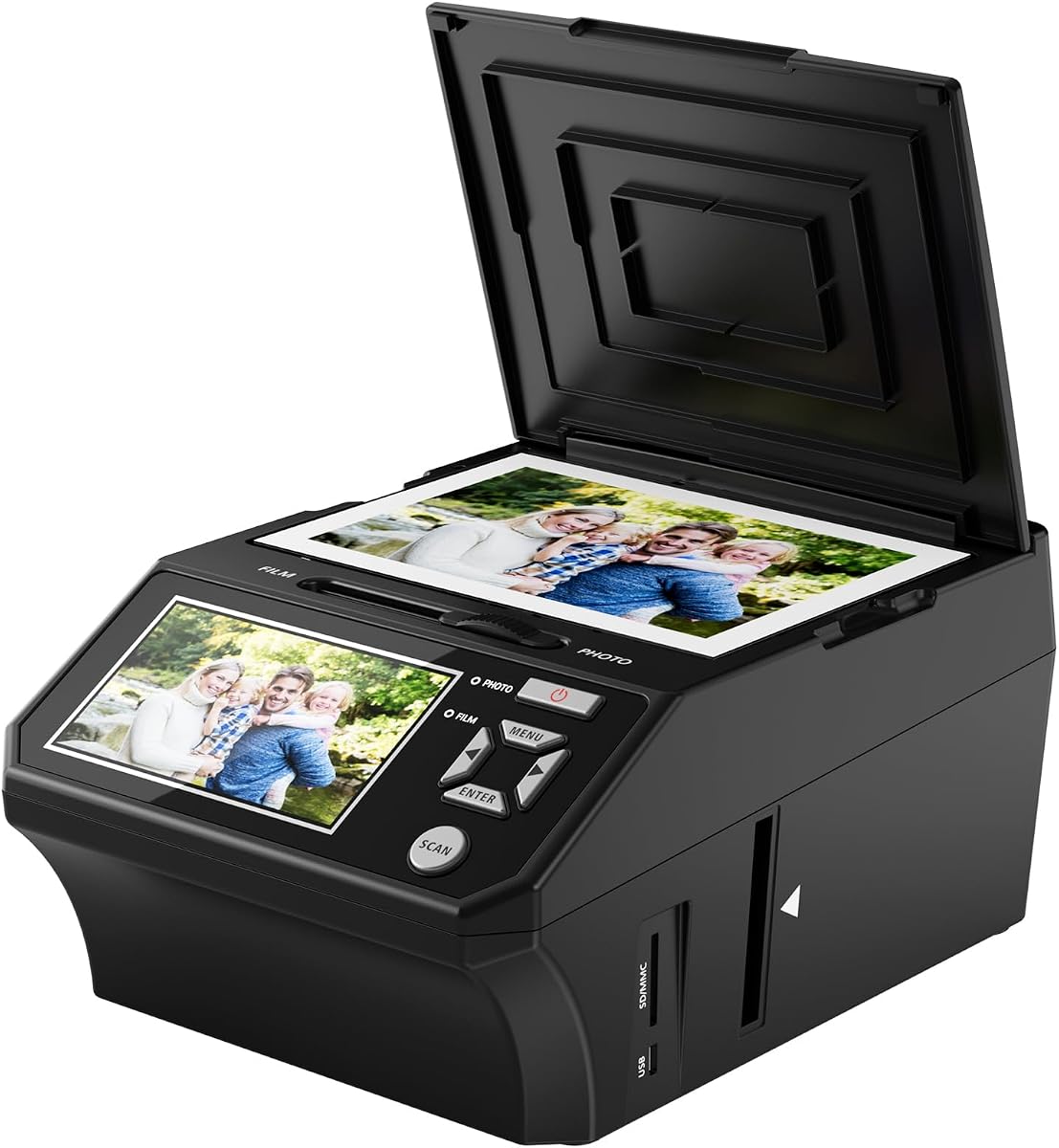
This scanner offers exceptional value by including an SD card and a long warranty. It converts not only slides but also printed photos and business cards. The 5 inch screen provides vibrant viewing for all types of images.
We may earn a commission when you buy through this link, at no additional cost to you.
The bundle includes everything you need to start scanning right out of the box. This saves time and money compared to buying accessories separately. The warranty ensures peace of mind for long term use.
One downside is the small size of the included SD card which may fill up quickly. However it is easy to replace with a larger one. The ability to handle printed photos adds extra utility to the device.
Ideal for families with mixed media this scanner covers all bases. It is simple to use and comes with necessary tools. If you want a complete solution this bundle is the best option.
Handles negatives slides and printed photos in one device simplifying your digitization needs.
The three year warranty offers reliable support and confidence in your purchase.
We may earn a commission when you buy through this link, at no additional cost to you.
This scanner is the most affordable option on the list while still offering solid features. It includes built-in memory for quick transfers and supports HDMI output for TV viewing. The 5 inch screen makes it easy to preview images instantly.
We may earn a commission when you buy through this link, at no additional cost to you.
It supports a wide range of formats including Super 8 and various negative types. You can adjust brightness and color directly on the device without a computer. The fast scanning speed ensures efficient workflow for large collections.
The built-in memory is small so you will likely need an SD card for bulk storage. But since it is budget friendly buying a card is a minor cost. The value proposition is strong for casual users.
Perfect for beginners or those on a tight budget this model delivers. It has all the essential tools for digitization. If you want quality without high cost this is the smart choice.
Get all the necessary scanning features at a fraction of the cost of premium models.
Use HDMI to view photos on your TV or USB to transfer files easily.
We may earn a commission when you buy through this link, at no additional cost to you.
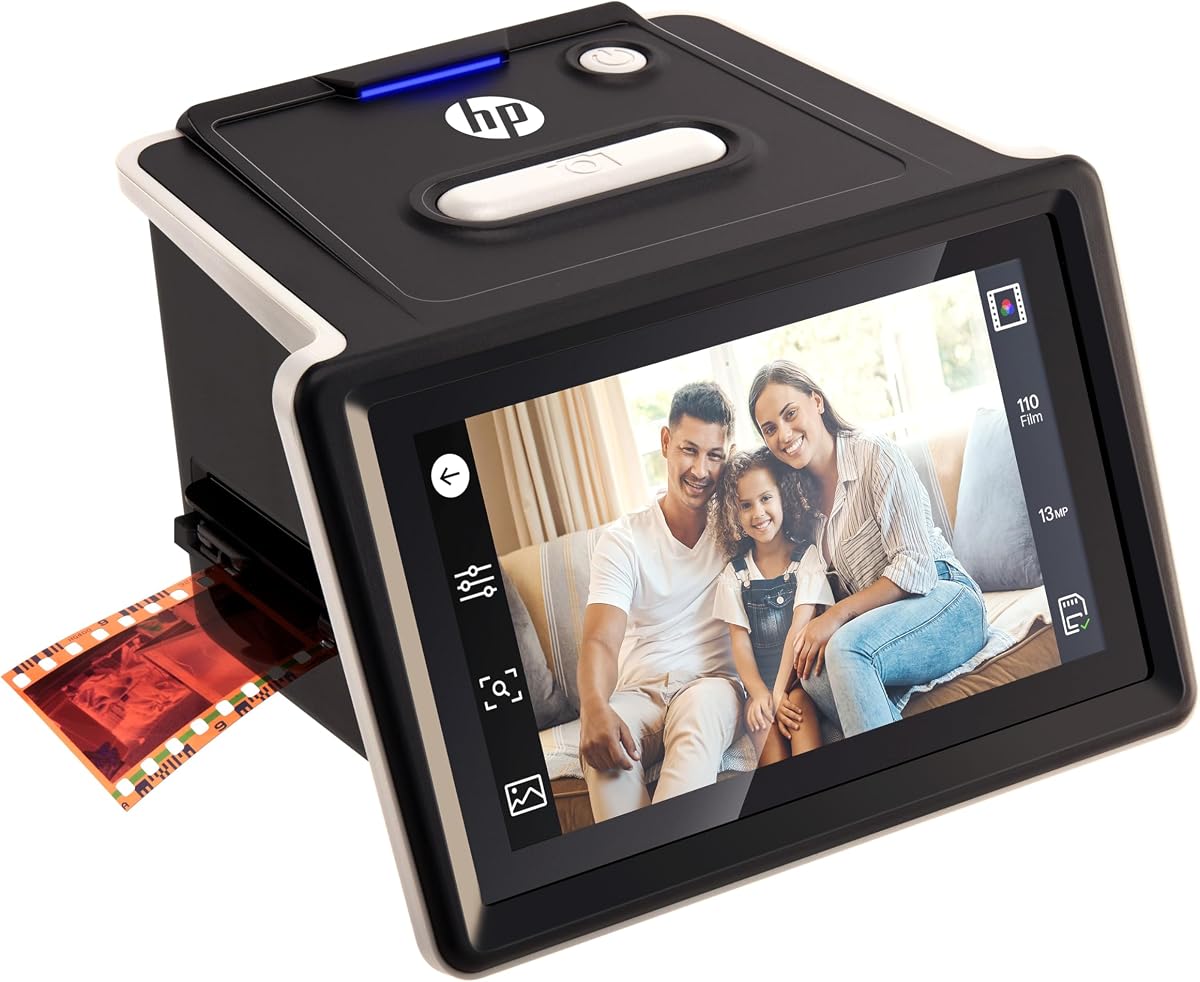
The HP model stands out with its large 7 inch touch display which simplifies navigation. You can crop and adjust scans directly on the screen using intuitive gestures. This makes it very accessible for users who prefer touch interfaces.
We may earn a commission when you buy through this link, at no additional cost to you.
It includes built-in editing tools so you can refine images without software. The gallery mode turns the device into a digital frame for continuous display. The quick-feed tray allows for efficient batch scanning of slides.
While the sensor is 13MP which is lower than some others it still captures good details. The main drawback is the lack of modern USB-C connectivity. However the touch experience makes up for it.
This scanner is ideal for those who want a modern interface. It reduces technical friction and makes digitizing enjoyable. If you prefer touch controls this HP model is the best fit.
Use your finger to navigate menus and edit photos just like on a tablet.
Adjust brightness and crop images right on the screen for immediate results.
We may earn a commission when you buy through this link, at no additional cost to you.
This HP model features modern USB-C connectivity which is great for newer computers. The 5 inch touch screen allows for easy preview and editing. It uses a 13MP sensor with 22MP interpolation for detailed images.
We may earn a commission when you buy through this link, at no additional cost to you.
The USB-C power source makes it more versatile for portable setups. It handles multiple film formats seamlessly. The interface is intuitive enough for beginners to use without guides.
It has a slightly smaller screen than other premium models but still works well. Not including an SD card is a minor inconvenience. However the connectivity is a major plus for modern users.
Choose this if you want modern connections and a touch interface. It balances features and performance well. If you prefer USB-C this is the top pick in its class.
Connect to modern laptops easily with the included USB-C cable.
Use the touch screen to crop and adjust photos quickly without menus.
We may earn a commission when you buy through this link, at no additional cost to you.
The KODAK SCANZA is unique for its support of 8mm film and Super 8 formats. The screen can tilt for better viewing angles which aids in operation. It provides high definition displays for viewing your old clips.
We may earn a commission when you buy through this link, at no additional cost to you.
It comes with useful cables like HDMI which allows easy transfer to TVs. The interface includes buttons for quick one-step scanning. You can edit resolution and RGB directly on the device.
The screen is smaller than modern options at 3.5 inches but still functional. You will need to buy an SD card separately. Despite this it remains a solid choice for film collectors.
This scanner is great for those with old home movies. It handles formats others miss. If you have 8mm film this is the ideal choice.
Digitize unique 8mm film formats that standard scanners cannot handle.
Tilt the screen to reduce glare and improve your viewing experience.
We may earn a commission when you buy through this link, at no additional cost to you.
This scanner is designed for portability with a small 2.4 inch screen. It is fully standalone meaning you can take it anywhere to digitize. The interface is simple with one-click capture for instant results.
We may earn a commission when you buy through this link, at no additional cost to you.
It supports SD cards up to 128GB and includes TV-out for sharing. This makes it easy to view photos on bigger screens. The lack of software requirements simplifies the process further.
The smaller screen might be harder to see for detailed adjustments. However it is perfect for quick scanning on the go. The compact size makes it easy to store when not in use.
Ideal for travelers or small spaces this scanner does the job. It is simple and efficient. If you want a small device this is the best option.
Take the scanner anywhere to digitize films without needing a desk setup.
One-click capture makes it easy to scan with just one press.
We may earn a commission when you buy through this link, at no additional cost to you.
The ClearScan T7 is a top rated premium scanner with a perfect 5-star rating. It features a large 7 inch touch screen and includes a 16GB SD card. This ensures you can start digitizing right away without extra purchases.
We may earn a commission when you buy through this link, at no additional cost to you.
The touch interface makes it easier for parents and grandparents to use. It has high resolution output to preserve all details in your old photos. The controls are designed to minimize confusion during use.
It is priced higher than basic models but offers better build quality. The included memory saves time and money. It is a complete package for serious archiving.
If you want the easiest and most complete experience choose this model. It is built for beginners and families. This is the best premium option available today.
Includes everything you need to start scanning immediately with included memory.
Simple touch interface reduces confusion for users of all ages.
We may earn a commission when you buy through this link, at no additional cost to you.
Choosing the right scanner depends on your specific needs and technical comfort. This guide outlines key factors to help you find the perfect match.
Resolution determines the clarity of your digital photos. Look for scanners with at least 13MP or higher for sharp details. Higher resolution helps when you plan to print large versions of old slides.
Larger screens like 5 or 7 inches make it easier to preview images. Touch screens offer more intuitive control compared to buttons. Consider a larger display if you plan to edit photos directly on the device.
Ensure the scanner supports your specific film types like 35mm or 110. Some models also handle rare formats like Super 8 or 8mm. Check the adapters included to avoid buying extra parts later.
Many modern scanners work without a computer which simplifies the process. Standalone units save storage directly to SD cards. This is ideal if you want to avoid installing drivers or software.
Look for HDMI ports to view photos on your TV directly. USB connections let you transfer files to your computer easily. Newer models with USB-C provide faster data transfer speeds.
Check if an SD card is included with the scanner. Most models support cards up to 128GB for large collections. Having a large card helps you store many images without transferring.
Batch scanning features allow you to process multiple slides at once. Faster scanners save time when digitizing large photo albums. Consider models with auto-feeding trays for easier operation.
Prices vary widely depending on features like touch screens. Look for warranties to protect your investment against defects. A longer warranty often indicates better build quality from the manufacturer.
First plug in your scanner and turn it on using the power button. Load your film into the correct tray using the provided adapters. Make sure the film is flat and free of dust before scanning.
Next select the film type on the display if required. Press the scan button to start the digitization process. Use the screen to preview images and adjust settings like brightness.
Finally save your photos to the SD card or transfer them via USB. Clean the scanner lens with the included brush regularly. Store the device in a dry place when not in use.
No many models work standalone and save directly to SD cards. You can preview and edit images on the device itself. This makes it easy to use without a computer.
A resolution of 13MP or higher is recommended for quality prints. This ensures fine details are captured from the original film. Higher resolutions help when viewing photos on large screens.
Most scanners support 35mm 110 and 126 formats. Some models also handle larger slides or Super 8 film. Check the adapter list to ensure your film type is supported.
You can use the USB cable to connect to your PC. Alternatively remove the SD card and use a card reader. Most systems automatically recognize the scanned files.
Yes most slide scanners handle both negatives and slides. They often have separate trays or adapters for each type. Check the model specifications for confirmed compatibility.
The limit depends on your SD card capacity. Cards up to 128GB can store thousands of images. You can delete files on the card to make space.
Most models take less than five seconds per slide. Some advanced devices have faster batch scanning modes. This allows you to process large collections quickly.
Cleaning slides ensures better quality scans without dust spots. Use a soft brush or cloth provided with the scanner. Dust can reduce the clarity of your digital images.
We explored ten excellent scanners for digitizing old film and slides. The KODAK Slide N Scan offers a great balance of features and ease of use. The HP models provide modern touch interfaces for easy control.
Choose based on your needs like screen size and film formats supported. If you want a complete package look at the ClearScan T7 with included memory. For budget friendly options the 22MP scanner is highly capable.
Always check current prices and availability before making a purchase. Technology updates often bring new features and discounts. Select the scanner that best fits your collection and workflow.