
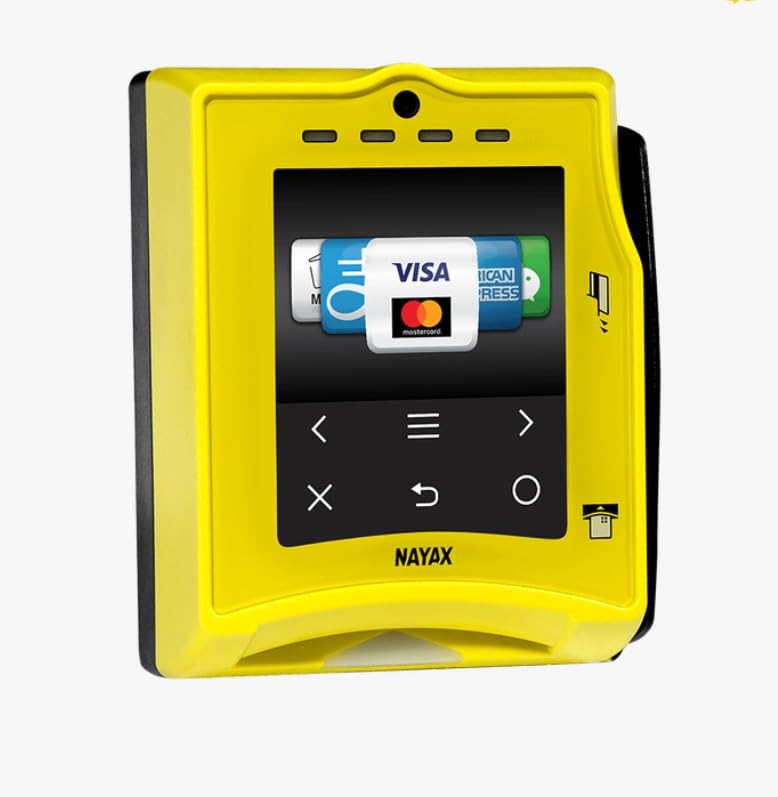
Nayax VPOS Touch
4.5Editor score
Customizable 2.4 inch color touchscreen
Anti-vandal IP55 rated with dragontrail glass
Supports loyalty programs and marketing tools
This comprehensive guide compares the top card readers for vending machines available in October 2026 to help you choose the best cashless payment solution for
Cashless payments have become the standard for modern vending operations. Operators need reliable card readers for vending machines that accept credit cards, mobile wallets, and contactless payments without downtime.
We evaluated ten top models based on connectivity, payment acceptance, durability, and ease of integration with MDB systems to help you find the right reader for your specific machine type and location.
Each pick shows key features, specs, and user feedback so you can compare options side by side. Prices and availability change frequently, so check the current listing before you make your final purchase decision today.
4.5Editor score
3.8Editor score

3.5Editor score
This side-by-side comparison helps you evaluate each reader on key specs like connectivity, payment types, and durability so you can quickly identify the model that fits your budget and operational needs.


The VPOS Touch stands out as a top choice for operators seeking a complete cashless solution. With a rating of 3.8 based on user feedback, it offers reliable acceptance of EMV chip cards and contactless payments.
We may earn a commission when you buy through this link, at no additional cost to you.
Its built-in 4G LTE antenna eliminates the need for separate network setup, ensuring instant cellular connection wherever your machine is placed. The Nayax management suite provides real-time telemetry so you can monitor inventory and cash levels remotely.
While it accepts all major payment forms, you must complete the activation process which may take time. Some operators note the higher cost compared to simpler readers, but the included connectivity and remote management tools justify the investment for growing routes.
If you need a secure, compliant reader that keeps your data safe and your sales visible from anywhere, the VPOS Touch is the clear recommendation. Its design ensures customers can pay quickly with card or phone without hiccups.
The real-time telemetry helps operators track sales and machine health from any device, reducing downtime and improving route efficiency.
Supporting EMV and NFC means you capture every customer who swipes, taps, or uses a mobile wallet without extra hardware.
We may earn a commission when you buy through this link, at no additional cost to you.
This version of the VPOS Touch adds a colorful LCD screen and enhanced durability for high-traffic or outdoor vending environments. Users appreciate the IP55 rating and dragontrail glass which protect against weather and vandalism.
We may earn a commission when you buy through this link, at no additional cost to you.
The device supports loyalty programs and punch cards, allowing operators to reward repeat customers directly at the machine. Voice prompts and multi-language support make it accessible to a wider range of customers in diverse locations.
Its larger footprint may not suit compact machines, and you will need to complete a merchant account setup before shipping. These are acceptable trade-offs given the extra value in marketing tools and robust physical protection.
Choose this model if your machines face tough conditions or if you want to boost engagement with customer incentives. The touchscreen interface guides users smoothly through payment steps and reduces transaction errors.
Built-in loyalty features help you retain customers by offering discounts or points without needing separate marketing campaigns.
IP55 rating and shock detection mean this reader can survive spills, dust, and impacts better than standard plastic models.
We may earn a commission when you buy through this link, at no additional cost to you.
This generic reader offers basic cashless functionality for operators who want to get started quickly with minimal technical complexity. The included yellow instruction sheet guides you through the necessary steps to activate the device.
We may earn a commission when you buy through this link, at no additional cost to you.
Support for MDB protocols ensures compatibility with many existing vending machines without needing extra adapters or complex wiring. However, you must allow time for activation after submission before the reader begins processing transactions.
Documentation is minimal, so you may need to reach out for help if issues arise. For many operators the delay and simple setup are acceptable given the lower upfront cost compared to premium models.
Opt for this unit if you need a no-frills card reader that gets the job done. Just plan ahead for the activation window and keep your machine offline until it is fully enabled.
Follow the steps in the yellow sheet carefully to avoid delays; activation can take up to 10 business days after you submit.
We may earn a commission when you buy through this link, at no additional cost to you.
The Symcode reader is a versatile USB device that can read magnetic stripe and contactless cards for use with registers or simple kiosks. It supports multiple tracks and chip types at a very low cost.
We may earn a commission when you buy through this link, at no additional cost to you.
It works in active and passive modes so you can integrate it with various software solutions. Two lights indicate connection status and flashing green light when swiping makes it clear when the device is ready.
Be aware that it only reads magnetic data and does not encode cards, which limits its use for membership or loyalty applications. Some users report difficulty accessing technical support when problems occur.
If you need a basic reader for low-volume applications where cost is critical, this model can work. However, for critical vending operations you may prefer a more robust solution with dedicated support.
The HID mode lets you connect to most systems without custom drivers, making it easy to test with different software.
We may earn a commission when you buy through this link, at no additional cost to you.
The Verifone VX520 is a classic card reader that still holds value for operators needing a simple secure solution. It accepts EMV chips and contactless payments while offering dial and Ethernet connection options for flexibility.
We may earn a commission when you buy through this link, at no additional cost to you.
Its compact design fits easily into standard vending panels without requiring major modifications. The device supports Apple Pay and other contactless methods, ensuring customers can pay quickly with a tap.
Compared to newer models it lacks advanced telemetry or marketing features, and it may require more setup steps for modern networks. For basic cashless needs on a budget this reader is reliable and familiar.
Consider the VX520 if you prioritize brand reliability and simplicity over advanced analytics. It provides solid payment acceptance and security for small routes or older machines.
You can choose dial or Ethernet depending on your site infrastructure, giving you more control over how the reader connects to the processor.
We may earn a commission when you buy through this link, at no additional cost to you.
This reader offers a wide range of card support including PSAM and CPU chips for users who need more than basic magnetic stripe reading. The package includes SDK and software to help with integration into custom systems.
We may earn a commission when you buy through this link, at no additional cost to you.
It reads tracks and chips for membership and checkout systems. However, it does not encode magnetic data, so you must be clear on your read versus write needs before purchasing.
The included user guide on CD helps you operate the device, but you may need technical skills to fully leverage the SDK. For developers or small businesses this offers good value.
Use this model if you need to read different card formats for a membership program. Ensure you have the right software setup before you plan to use it in a vending context.
With SDK tools and manual support you can build custom applications that integrate the reader into your own checkout software.
We may earn a commission when you buy through this link, at no additional cost to you.
The E-seek M-260 is designed for reading government IDs and barcodes rather than payment transactions. It supports magstripe and 2D data so it is useful for age verification or access control.
We may earn a commission when you buy through this link, at no additional cost to you.
A bottom interface connector makes it ideal for kiosk setups where cable management matters. The included 6 foot smart cable gives you flexibility for placement within a machine or counter.
If you need to scan IDs to control product access this tool is effective. It is not meant for processing credit or debit payments so plan your hardware list accordingly.
Add this reader if your vending machine sells age-restricted items. It provides reliable scanning to verify customers before transactions occur.
The bottom interface allows clean cable routing in kiosk enclosures, reducing clutter and improving safety.
We may earn a commission when you buy through this link, at no additional cost to you.
This reader is compact and supports contactless and EMV contact payments through CardPointe systems. It is PCI P2PE compliant which keeps card data secure during transactions.
We may earn a commission when you buy through this link, at no additional cost to you.
You must open a new merchant account before the device ships, so plan for that lead time. The stand included helps position the reader for customer use in a friendly way.
It supports surcharging which allows you to pass processing costs if your policy permits. The compact size makes it easy to fit into tight spaces.
Choose the VP3350 if you want a small and secure reader tied to a specific payment gateway. Be sure you are ready to set up the merchant account in advance.
P2PE encryption ensures card data is protected at every step, giving customers confidence when using your machine.
We may earn a commission when you buy through this link, at no additional cost to you.
The MTMS15 adds multi-factor security with card plus PIN so you can control access more strictly. It uses open architecture which helps when customizing your system or integrating with unique software.
We may earn a commission when you buy through this link, at no additional cost to you.
Real-time networked features keep data flowing smoothly between the reader and your backend. Mobile NFC support ensures modern payment methods are accepted without friction.
This model is more complex to set up and comes at a higher price. If you need strong authentication and flexibility it can be worth the investment.
Use the MTMS15 for locations where security and customization are top priorities. It gives you control over who can transact and how payments are processed.
Requiring a PIN along with a card reduces unauthorized use and adds a layer of protection for high-value items.
We may earn a commission when you buy through this link, at no additional cost to you.
This Bluetooth enabled reader works with mobile devices and supports multiple operating systems including Windows macOS iOS and Android. It reads and writes card tracks which helps for membership or loyalty programs.
We may earn a commission when you buy through this link, at no additional cost to you.
It is designed more for mobile POS than fixed vending but can be adapted with the right setup. Free software makes it easy to start using without extra fees.
Bluetooth range and power limits mean you may not want this in a fixed high-traffic vending slot. Still, it is handy for operators who need a portable card reader.
Consider the X6BT if you need flexibility across devices or plan to use it with mobile apps. It provides write capability that many standard readers do not offer.
Connect to iOS or Android devices to process payments or read cards on the go without a wired connection.
We may earn a commission when you buy through this link, at no additional cost to you.
Selecting the right card reader requires balancing connectivity, security, and durability against your budget and route needs. This guide breaks down the key factors to help you make an informed decision.
Reliable connectivity ensures your machine stays online to accept payments. Look for models with built-in 4G LTE for cellular sites or Ethernet for locations with wired internet access.
Choose a reader that matches your site infrastructure to avoid extra hardware costs and downtime.
Modern customers expect to pay with chip cards contactless taps and mobile wallets like Apple Pay. Ensure the reader supports EMV and NFC to capture all these options.
A reader that accepts multiple payment types reduces declined transactions and improves customer satisfaction.
Most vending machines use MDB or Pulse protocols to communicate with external devices. Verify the reader is certified to work with your machine's interface to prevent integration issues.
Proper protocol support ensures smooth data exchange between the payment terminal and your machine.
PCI DSS and P2PE compliance protect customer card data during transactions. Choose readers that meet these standards to keep your business safe from fraud risks.
Security certifications are non-negotiable for handling payment information in any environment.
Vending machines can face dust, moisture, and physical impacts. Look for ratings like IP55 and materials like dragontrail glass to ensure long life.
A durable reader minimizes replacement costs and maintains uptime in tough conditions.
Real-time sales and inventory data help you manage routes efficiently. Readers with management suites let you monitor cash levels and machine status from a phone or laptop.
Remote insights save time and help you restock or fix issues before they impact revenue.
Some readers require merchant account setup or activation steps before they start working. Plan for these steps to avoid delays when you receive your device.
Check activation timelines and requirements before purchasing so you know when the reader will be live.
Beyond the purchase price consider transaction fees, maintenance, and any required software subscriptions. A cheaper reader might cost more over time if it lacks efficiency or durability.
Evaluate the full cost and feature set to pick a solution that pays off over the long term.
First ensure the reader is properly connected via MDB or USB and that any required activation steps are completed before opening the machine to customers. Test a sample transaction to confirm lights and alerts work.
Keep the reader clean by wiping the screen and card slot with a dry soft cloth. Avoid harsh chemicals that could damage the surface or affect sensor performance.
Monitor telemetry data regularly to catch connectivity issues early and plan firmware updates during off-peak hours to avoid interrupting sales.
Many models include built-in 4G LTE so they do not need separate Wi-Fi or Ethernet. Others offer Ethernet as an option. Choose based on your site's available infrastructure.
Activation time varies. Some devices activate in minutes while others may take up to 10 business days. Check the product description or manual for your specific model timeline.
MDB stands for Multiple Drop Bus and is the standard protocol for vending machines to talk to peripherals. MDB compatibility ensures your reader will communicate properly with your machine.
Yes most modern readers support NFC and contactless payments which include Apple Pay Google Pay and Samsung Pay. Check the specs for NFC support.
Look for PCI DSS and P2PE compliance. These standards encrypt and protect card data during transactions to keep both customers and operators safe.
Some readers like the VP3350 require a new merchant account before shipment. Others can use existing terminals. Verify merchant requirements before buying.
Use a dry microfiber cloth to gently wipe the screen. Avoid liquids and chemicals that could scratch or damage the display or sensors.
Readers with management suites like Nayax provide real-time telemetry. You can monitor sales and inventory levels from a mobile app or web portal.
The VPOS Touch, Nayax VPOS Touch, and Verifone VX520 lead this list with strong performance, connectivity, and security. Each offers features tailored to different needs from remote management to durability.
Prioritize readers that match your machine's protocols and support the payment methods your customers prefer. Remote telemetry and compliance are worth the investment for long-term efficiency.
Prices and availability change so check the current listings before you finalize your purchase. With the right card reader you can improve uptime and customer satisfaction.