
SIRUI Night Walker 35mm S35 Manual Focus Cine Lens
4.4Editor score
T1.2 large aperture
S35 coverage
Lightweight design
This guide compares the best cine lenses for professional filmmaking, covering top picks for budget, premium, and versatile options across various camera
Cine lenses are essential tools for filmmakers seeking cinematic imagery with smooth focus transitions and consistent color. They differ from photo lenses by offering precise mechanical controls and de-clicked apertures for video work.
We evaluated ten top-rated cine lenses based on optical performance, build quality, and versatility across different camera systems. Our analysis focuses on real-world usability for both independent creators and professional production teams.
Each pick highlights specific strengths like low-light capability, mount compatibility, or affordability. Please note that prices and availability change frequently, so check current listings before making your final decision.
4.4Editor score

4.5Editor score
5.0Editor score
This side-by-side comparison outlines key specifications and features for all ten featured cine lenses to help you identify the best match for your specific camera setup and budget.




The Rokinon Cine DS DS85M-C stands out as a top choice for filmmakers needing reliable portrait focal lengths. With a high 4.5 rating, this lens delivers consistent optical quality and precise mechanical controls tailored for video production.
We may earn a commission when you buy through this link, at no additional cost to you.
Its T1.5 maximum aperture allows for exceptional low-light performance while creating smooth background separation. The lens features full frame coverage and unified gear positions that simplify rigging and ensure compatibility across the Rokinon DS lineup.
While the lens requires manual focus operation and is limited to Canon EF mounts, these trade-offs are acceptable for users prioritizing budget-friendly cine performance. The 72mm filter size and standard industry gearing make it a practical addition to any kit.
This lens is ideal for independent creators and small production teams seeking professional features without premium pricing. We recommend it for portrait work and low-light scenarios where its T1.5 aperture truly shines.
Unified gear and aperture positions across the Rokinon DS series streamline workflow and ensure seamless lens swaps.
The T1.5 aperture captures ample light, enabling clean footage in dim environments without excessive ISO noise.
We may earn a commission when you buy through this link, at no additional cost to you.
This ROKINON CINE DS kit offers an exceptional value proposition with four essential focal lengths for versatile storytelling. Its outstanding 4.9 rating reflects strong user confidence in its optical quality and mechanical consistency across all included lenses.
We may earn a commission when you buy through this link, at no additional cost to you.
The kit covers popular primes from 24mm to 85mm, enabling everything from wide environmental shots to tight portraits. Each lens shares the same T1.5 aperture, unified gear positions, and color matched coating to ensure visual consistency.
Users note the dual side focus and T-stop scales provide professional-level control without the cost of high-end alternatives. While it is limited to Canon EF and focuses manually, it meets the needs of most entry-level to intermediate filmmakers.
We recommend this kit for teams needing a complete setup without breaking the budget. It is an excellent starting point for those transitioning from stills to dedicated cinematic production workflows.
Four lenses covering 24mm to 85mm provide comprehensive coverage for diverse shooting scenarios and compositions.
Consistent color temperature and tone across the kit prevent mismatched looks when switching lenses during production.
We may earn a commission when you buy through this link, at no additional cost to you.
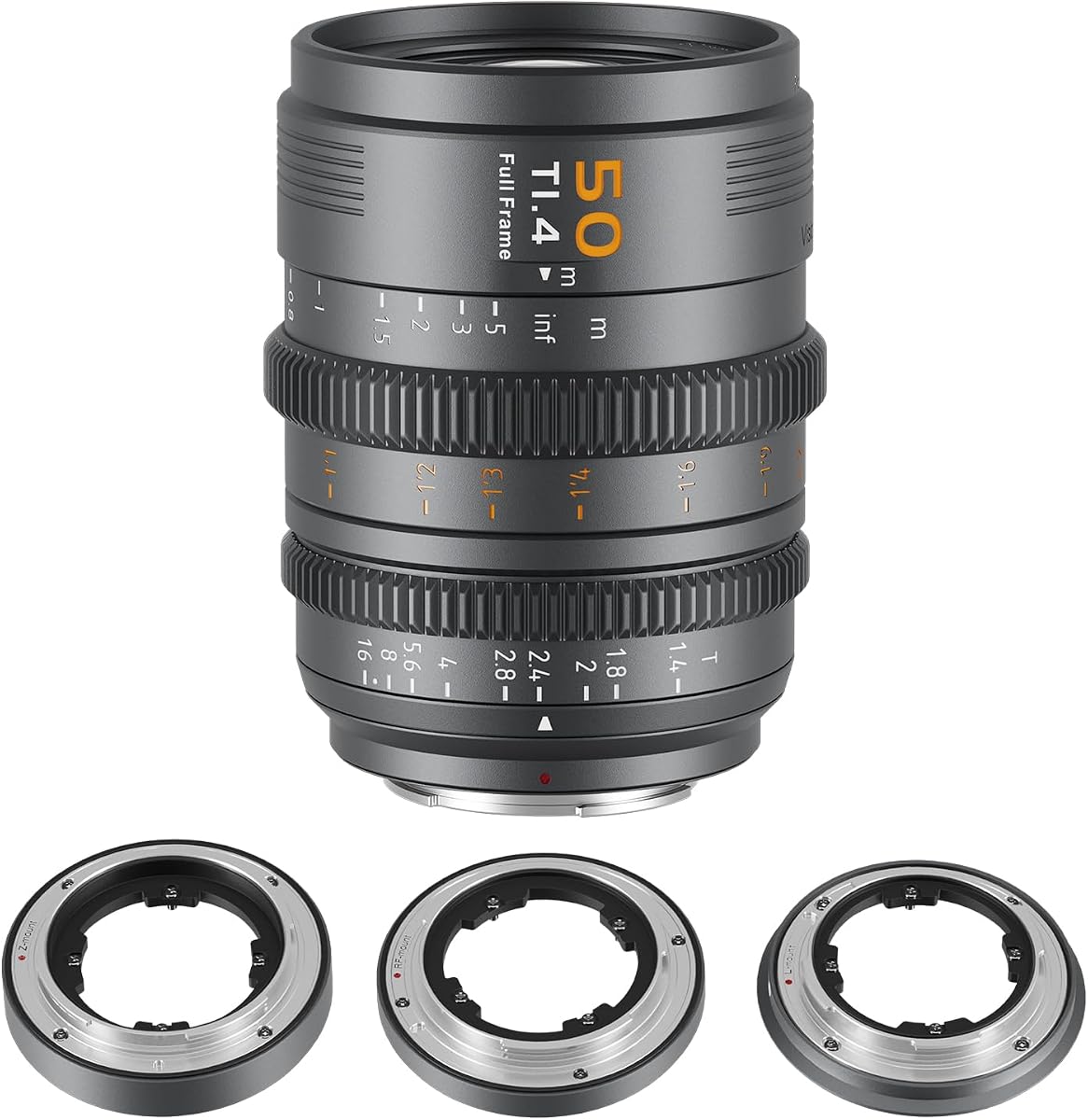
The SIRUI VP-1 Vision Prime 1 earns a perfect 5.0 rating for its exceptional versatility and optical performance tailored for modern cameras. Its interchangeable mount system makes it uniquely adaptable across Sony, Canon, Nikon, and Panasonic ecosystems.
We may earn a commission when you buy through this link, at no additional cost to you.
Engineered with aspherical and ED glass, this lens delivers edge-to-edge sharpness suitable for 8K resolution. The fast T1.4 aperture excels in low-light conditions while producing dreamy bokeh that enhances subject separation in any scene.
Weighing just 600 grams, the lens is compact enough for stabilization while maintaining durable aluminum alloy construction. Users praise its uniform design across the lineup, which simplifies gear positioning and production workflows significantly.
This lens is best suited for professional filmmakers who need seamless cross-platform compatibility without compromising image quality. Its premium features justify the investment for those seeking future-proof optics for high-resolution cinema.
Switch between E, RF, Z, and L mounts effortlessly to match your camera system without buying multiple lenses.
Aspherical and ED glass elements ensure edge-to-edge sharpness and minimal chromatic aberrations for crisp footage.
We may earn a commission when you buy through this link, at no additional cost to you.
The Rokinon 35mm T1.5 Cine DS Lens provides a versatile wide-angle option with strong optical consistency. With a 4.6 rating, it is known for delivering smooth manual focus and reliable aperture control across Canon EF mount cameras.
We may earn a commission when you buy through this link, at no additional cost to you.
Its T1.5 aperture offers excellent low-light capability while the de-clicked ring ensures silent adjustments during recording. The lens features full frame coverage and shares unified gear positions with other DS lenses for easy rigging.
While limited to Canon EF mounts, it is an excellent choice for those invested in the Canon ecosystem. The 77mm filter size is standard and easily accessible for ND or polarizing filter setups during production.
We recommend this lens for documentary work and run-and-gun filming where consistent optical quality is crucial. It serves well as a versatile workhorse lens for general storytelling purposes.
Color matched and unified gear positions ensure seamless integration with other Rokinon DS lenses in your kit.
The de-clicked aperture ring allows for smooth exposure changes without distracting clicks during video recording.
We may earn a commission when you buy through this link, at no additional cost to you.
The SIRUI Night Walker 35mm S35 delivers exceptional low-light performance with its massive T1.2 aperture. Rated 4.4 by users, it is specifically designed for APS-C cameras like the Sony FX30, allowing clean footage without high ISO noise.
We may earn a commission when you buy through this link, at no additional cost to you.
Its lightweight design at 500 grams makes it ideal for gimbal use and handheld documentary work. The aluminum cine housing protects internal optics while maintaining a compact profile for travel and run-and-gun productions.
Optical performance is outstanding even at maximum aperture, with well-controlled aberrations and minimal focus breathing. This ensures smooth focus pulls and clean images across various lighting conditions without distracting optical flaws.
We recommend this lens for indie filmmakers and content creators using Sony E-mount cameras who need fast aperture. Its balance of affordability, weight, and optical quality makes it a compelling choice for budget-conscious professionals.
The T1.2 aperture captures more light, reducing the need for high ISO settings and keeping images clean.
At just 500 grams, the lens is easy to stabilize on gimbals or for handheld use without fatigue.
We may earn a commission when you buy through this link, at no additional cost to you.
The SIRUI Night Walker 24mm S35 provides a versatile wide-angle perspective for environmental storytelling. With a 4.3 rating, this lens is optimized for RF mount cameras and features a T1.2 aperture for low-light versatility.
We may earn a commission when you buy through this link, at no additional cost to you.
Its 0.3m close focus capability allows for creative intimate shots and detailed environmental compositions. The 270 degree focus rotation enables smooth and precise manual adjustments essential for professional video production workflows.
While limited to S35 coverage, it is an excellent option for users seeking a wide prime in the Night Walker series. The optics deliver high sharpness with controlled aberrations even at the maximum T1.2 aperture setting.
We recommend this lens for Canon RF users needing a fast wide-angle prime for landscapes or interiors. Its build quality and optical performance make it a strong contender for independent production teams.
Focus as close as 0.3m to capture intricate details and immersive environmental close-ups with depth.
The 24mm focal length offers a versatile field of view for broad composition and natural looking visuals.
We may earn a commission when you buy through this link, at no additional cost to you.
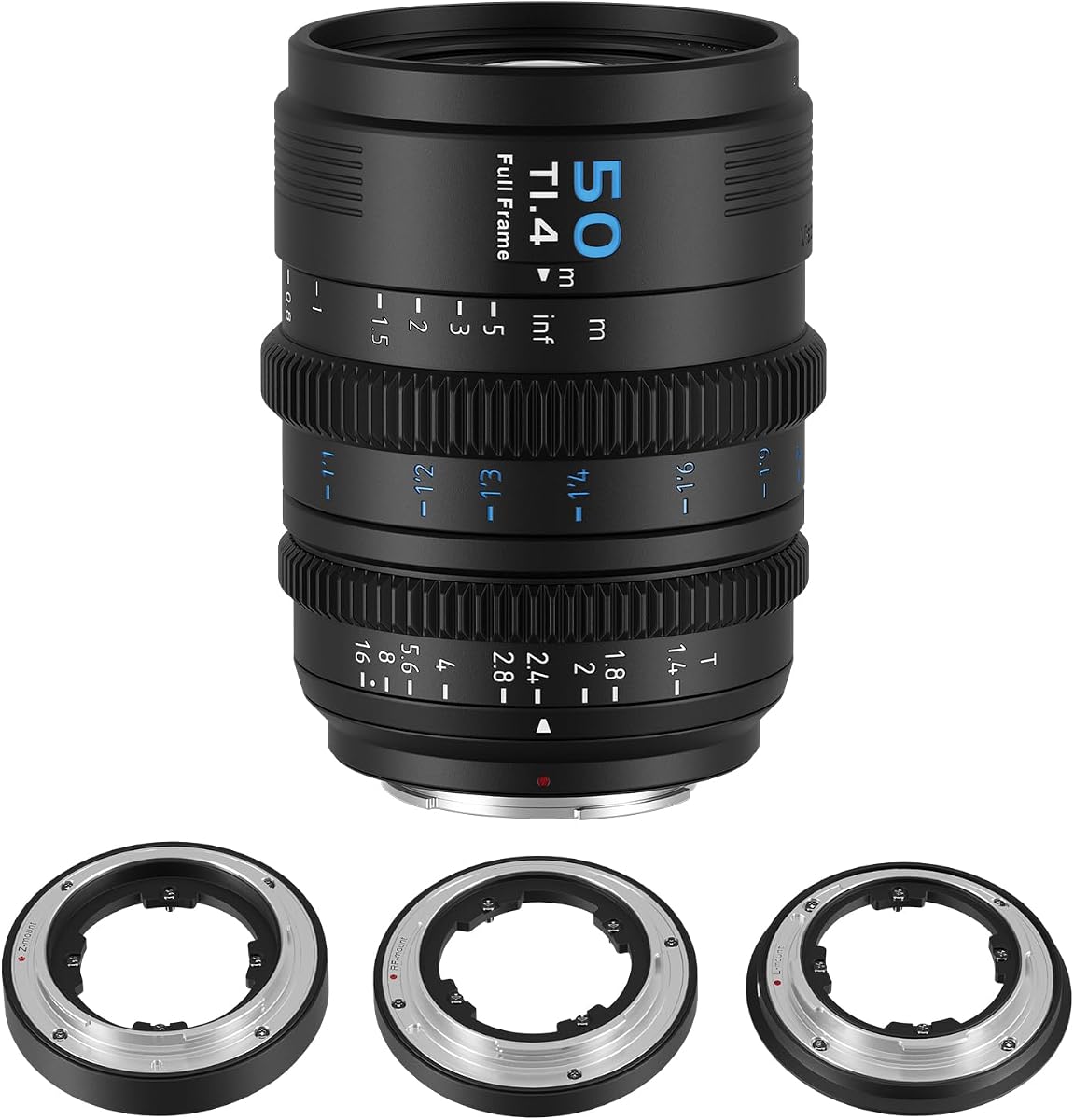
The SIRUI VP-1 Vision Prime 1 is designed for filmmakers needing a fast 50mm prime across multiple camera systems. With a 4.0 rating, it offers consistent optical performance and robust build quality suitable for high-resolution video.
We may earn a commission when you buy through this link, at no additional cost to you.
Its T1.4 aperture enables beautiful subject separation and low-light capability. The interchangeable mount system allows seamless switching between Sony, Canon, Nikon, and Panasonic cameras without compromising image quality or workflow.
The lens is engineered for 8K storytelling with advanced glass elements to minimize aberrations. Users appreciate its uniform design across the lineup, which ensures identical gear positions and consistent color matching for professional results.
We recommend this lens for creators investing in a unified lens ecosystem across different camera bodies. Its versatility and premium construction make it a reliable choice for high-end cinematic production.
Switch between E, RF, Z, and L mounts easily to adapt the lens to different professional camera systems.
Optimized for 8K with advanced glass to deliver edge-to-edge sharpness and minimal chromatic aberrations.
We may earn a commission when you buy through this link, at no additional cost to you.
The SIRUI Night Walker 24mm S35 delivers impressive optical performance for M4/3 systems. With an outstanding 4.9 rating, users praise its T1.2 aperture and lightweight design ideal for the Blackmagic Pocket Cinema Camera 4K and GH series.
We may earn a commission when you buy through this link, at no additional cost to you.
Its fast aperture excels in low-light conditions while the aluminum housing ensures durability without adding excessive weight. The lens provides S35 coverage suitable for cinematic storytelling with pleasing bokeh and controlled aberrations.
Optical sharpness remains high even at maximum aperture with minimal focus breathing. This makes it particularly effective for documentaries and travel work where quick handling and reliable image quality are essential.
We recommend this lens for M4/3 users seeking a fast wide-angle prime at an affordable price point. Its build quality and optical consistency make it a standout choice for independent filmmakers.
At 500 grams, the lens is portable and easy to stabilize for gimbal or handheld shooting setups.
Capture more light for clean footage in low-light environments without needing high ISO settings.
We may earn a commission when you buy through this link, at no additional cost to you.
The Rokinon DSX85 DSX 85mm T1.5 is a strong portrait lens with excellent optical construction and a 4.7 rating. It is designed for Canon EF mount cameras and features ultra multi-coated glass for high image quality and clarity.
We may earn a commission when you buy through this link, at no additional cost to you.
Its T1.5 aperture creates soft subject separation while the 9 aperture blades produce attractive bokeh. The lens covers full frame sensors and maintains consistent color matching with other Rokinon DS lenses for professional workflows.
Users appreciate the balanced design and smooth focus throw ideal for manual focusing. While it is limited to Canon EF mounts, its optical performance and build quality make it a reliable option for many filmmakers.
We recommend this lens for portrait work and low-light situations requiring a fast prime. Its value and optical consistency make it a solid choice for intermediate to advanced production teams.
The 85mm focal length and T1.5 aperture provide ideal subject separation and flattering background blur.
Built with 9 elements in 7 groups and ultra multi-coated glass for sharp images and minimal flare.
We may earn a commission when you buy through this link, at no additional cost to you.
The DZOFILM Pictor 50-125mm T2.8 is a premium parfocal zoom lens with a perfect 5.0 rating. It is built for professional cinema production with PL mount compatibility and Canon EF options ensuring broad workflow integration.
We may earn a commission when you buy through this link, at no additional cost to you.
Its parfocal design maintains focus across the entire zoom range, a critical feature for dynamic camera movements. The lens minimizes focus breathing and includes a 16-slat iris for smooth aperture control and pleasing background rendering.
Users value its compatibility with standard cine lens accessories and robust construction. While it carries a higher price point, its optical quality and mechanical performance justify the investment for professional film and video work.
We recommend this lens for productions requiring a versatile zoom without losing focus precision. Its reliability and high standards make it a top-tier choice for cinema professionals.
Maintains sharp focus throughout the zoom range, essential for smooth and professional camera movements.
Advanced optical design reduces focus shift when changing focus, ensuring consistent framing during shoots.
We may earn a commission when you buy through this link, at no additional cost to you.
Selecting the right cine lens requires careful consideration of multiple technical and practical factors that directly impact your workflow and output quality.
Ensure the lens mount matches your camera system exactly. Options include Canon EF, RF, Sony E, Nikon Z, and PL mounts. Some lenses offer interchangeable mount systems for greater flexibility across camera brands.
Always verify mount compatibility with your specific camera model to avoid physical fit issues and electronic communication limitations.
Cine lenses with T1.4 or T1.5 maximum apertures excel in low-light situations and create strong subject separation. Wider apertures allow more light to reach the sensor, reducing ISO noise in dim environments.
Look for de-clicked aperture rings to enable smooth and silent adjustments during video recording without distracting clicks.
Full frame coverage is essential for cameras with large sensors, while S35 or APS-C coverage suits smaller sensors. Using a lens designed for smaller sensors on a full frame body results in visible cropping and reduced field of view.
Match the lens sensor coverage to your camera's sensor size to maximize image quality and avoid unnecessary vignetting.
Professional cine lenses typically feature durable aluminum bodies with standardized gear positions for rigging. Weight impacts stabilization and handheld comfort, with lighter lenses around 500-600 grams ideal for gimbals.
Prioritize lenses with consistent mechanical design and protective housing to withstand professional use and rough transport conditions.
Manual focus is standard for cine lenses but should offer smooth rotation and accurate calibration. Minimal focus breathing ensures the framing remains consistent when adjusting focus during shots.
Evaluate optical sharpness, color consistency, and minimal chromatic aberrations to guarantee professional image quality across all focal lengths.
Consider whether you need a prime lens for specific focal lengths or a zoom lens for flexibility. Zoom lenses with parfocal designs maintain focus while zooming, which is crucial for dynamic shots and professional production.
Invest in versatile focal lengths like 24mm, 35mm, 50mm, and 85mm for most general filmmaking applications and storytelling needs.
Cine lenses range from budget-friendly options to high-end premium models. Entry-level kits offer excellent value for beginners, while professional lenses provide advanced optical and mechanical features.
Consider the total cost of ownership including filters, rigging, and future expansion to ensure long-term compatibility with your workflow.
Check filter thread sizes and external dimensions to ensure compatibility with your existing ND filters, matte boxes, and cage systems. Standardized gear positions simplify adding follow focus units and other accessories.
Choose lenses with common filter sizes and standardized dimensions to streamline setup and minimize additional gear expenses.
Mount the lens securely on your camera and ensure all mechanical locks are engaged. Adjust the focus and aperture rings smoothly to avoid sudden shifts during recording. Use the lens markings for repeatable focus pulls in scripted scenes.
Keep the lens clean using a soft microfiber cloth and proper lens fluid when necessary. Protect the glass from dust and moisture by using UV or protective filters during shoots. Store the lens in a padded case to prevent scratches and accidental impacts.
Calibrate the focus and aperture gears regularly to maintain precision. If using interchangeable mounts, handle the mount rings carefully to avoid damage. Always store lenses in a dry, cool environment to prevent internal condensation and optical element degradation.
Cine lenses feature de-clicked aperture rings for smooth exposure changes, standardized gear positions for rigging, and minimal focus breathing. They also typically offer better optical consistency across focal lengths and manual focus controls designed for precise video production.
No, cine lenses are designed for specific mounts like Canon EF, PL, or Sony E. However, some models offer interchangeable mount systems or adapter compatibility to work across multiple camera brands and systems effectively.
Yes, even beginners benefit from the superior optical quality and mechanical control of cine lenses. Entry-level kits provide excellent value with full kits that allow versatile shooting while building skills in professional filmmaking workflows.
Apertures of T1.2 to T1.5 are ideal for low-light cinematography as they allow maximum light intake without excessive ISO noise. Faster apertures also enhance subject separation and background blur for cinematic look.
Yes, cine lenses can be used for still photography with excellent optical performance. However, they require manual focus and lack electronic autofocus or image stabilization features typically found on still camera lenses.
Regularly calibrate focus and aperture rings using the lens markings. Ensure follow focus gears are aligned correctly with the lens gears to maintain precise focus tracking during shots. Avoid excessive force when adjusting focus manually.
Choosing the best cine lens depends on your specific camera system, budget, and production needs. The top picks offer a mix of affordability, versatility, and premium optical performance suited for filmmakers at different levels.
Prioritize factors like mount compatibility, aperture speed, and sensor coverage to ensure the lens integrates seamlessly into your existing workflow. Consider future needs such as interchangeable mounts or parfocal zooms if you plan to expand your camera systems.
Always verify current availability and pricing before purchasing as these details change frequently. With the right lens, you can unlock professional-quality footage and elevate your cinematic storytelling significantly.