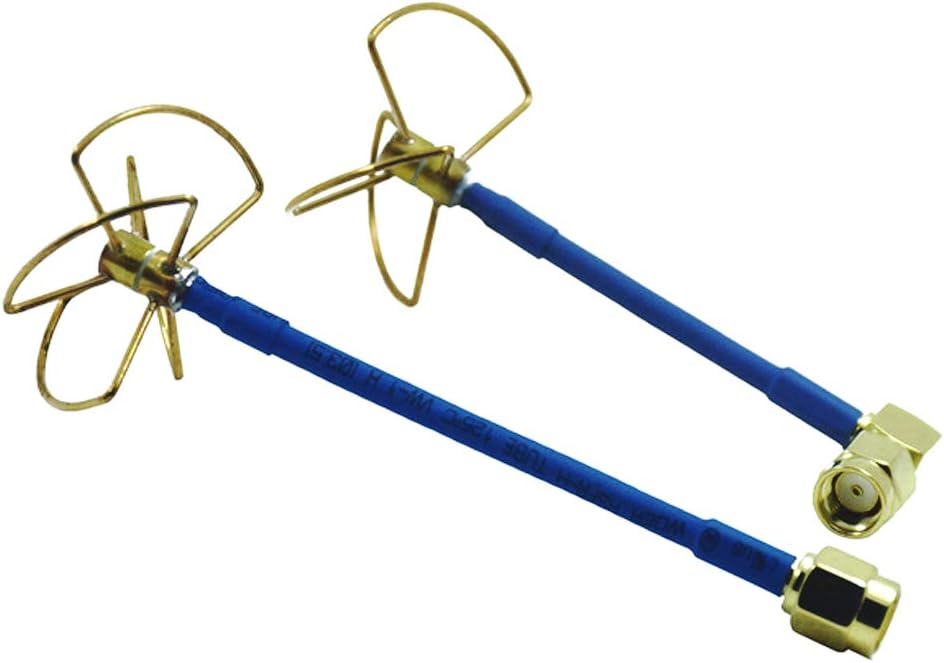
Anbee 2pcs FPV 5.8Ghz Circular Polarized Clover Leaf Antenna
4.3Editor score
3dBi gain for balanced range
RP-SMA male plug connector
Compatible with FPV racing drones
This guide compares the top circular polarized antennas for FPV drones and broadcast use, evaluating gain, range, and interference reduction for optimal signal
Circular polarized antennas are essential for maintaining clear signal transmission in dynamic environments. They reduce multipath interference and ensure stable video feeds for drones or radio broadcasts. Choosing the right model depends on frequency, gain, and connector types.
We evaluated ten leading products based on their technical specifications and user feedback. Our analysis covers broadcast, FPV, and wideband applications. Each entry highlights key features like polarization type, gain ratings, and build quality to help you decide.
Every pick includes detailed pros and cons alongside specific use cases. We also provide a buying guide to clarify factors like frequency range and connector compatibility. Prices and availability change frequently, so verify details before purchasing to ensure you get the latest model.
4.3Editor score

4.3Editor score

5.0Editor score
The following table provides a side-by-side comparison of all ten selected antennas. It highlights their primary applications, frequency ranges, and key technical specifications to help you quickly identify the best match for your specific setup.


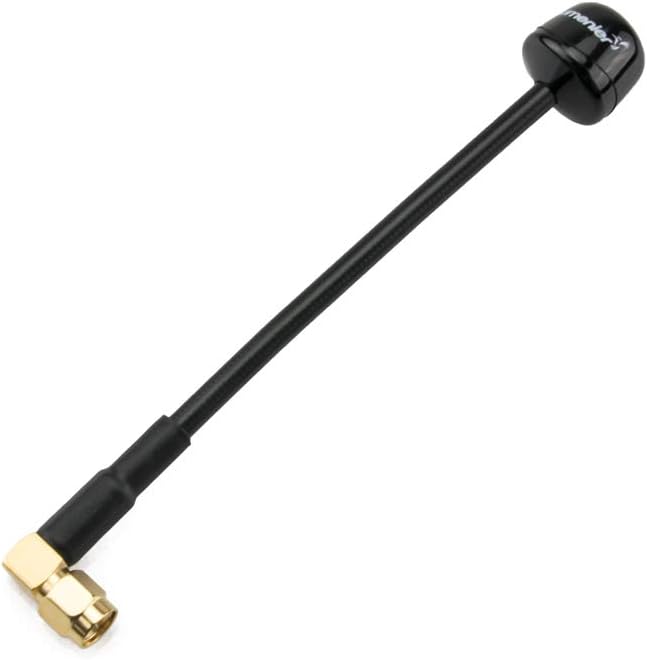


This antenna is designed for high-power FM broadcasting within the standard 88-108MHz band. With a 350W capacity and robust aluminum build, it ensures reliable transmission for community radio or large-scale events.
We may earn a commission when you buy through this link, at no additional cost to you.
Its dual-polarization technology supports both vertical and horizontal signals, which is crucial for urban environments where signal reflection is common. The precision frequency tuning allows operators to optimize performance easily.
While it excels in stability, its weight and size might be a consideration for smaller setups. However, the trade-off is a durable unit that withstands harsh weather conditions without degradation over time.
Ideal for professional broadcasters needing consistent coverage, this model stands out as the top pick. It balances power handling with signal clarity, making it a superior choice for serious radio stations.
The double-crossed dipole design ensures that signals penetrate dense areas effectively, reducing dead zones in cities.
Built with professional waterproof sealing, this antenna survives extreme weather, ensuring your broadcast stays active during storms.
We may earn a commission when you buy through this link, at no additional cost to you.
For budget-conscious drone pilots, this set offers excellent value. It features a classic clover leaf design that provides omni-directional coverage, perfect for general racing and freestyle flying where direction changes often.
We may earn a commission when you buy through this link, at no additional cost to you.
The RP-SMA connectors ensure secure attachments, and the gain is sufficient for most short to mid-range flights. It is compatible with various FPV goggles and transmitters, making it versatile for different brands.
While it lacks the high gain of directional antennas, its omnidirectional nature is a major benefit for beginners who cannot predict drone orientation. However, it may not reach extreme distances compared to patch models.
This is the best budget pick because it balances cost with reliability. If you need a reliable backup or entry-level option, this set delivers consistent performance without breaking the bank.
The circular polarization minimizes signal distortion caused by reflections, which is vital for clear video feeds during complex maneuvers.
Designed for standard RC systems, these antennas work with most cars, drones, and multicopters operating on the 5.8GHz band.
We may earn a commission when you buy through this link, at no additional cost to you.
This patch antenna is engineered for pilots who prioritize range and signal clarity. With 11dBi gain, it significantly reduces static and ensures a clean image even during aggressive high-speed flights.
We may earn a commission when you buy through this link, at no additional cost to you.
Its RHCP optimization helps cancel out multipath interference, which is common in urban racing environments. The lightweight build means it won't add bulk to your goggles, maintaining comfort during long sessions.
Because it is directional, you must keep the antenna aligned with the drone for best results. While this adds a slight learning curve, the reward is a much stronger and more stable video link.
If you are building a long-range or racing setup, this antenna is a top contender. It combines military-grade materials with practical design to deliver professional-level performance at a reasonable price point.
The high-gain design extends your flight distance, allowing you to push further without losing the video feed due to signal degradation.
Constructed with Teflon and high-frequency PCBs, this antenna resists temperature changes and corrosion for reliable operation in any weather.
We may earn a commission when you buy through this link, at no additional cost to you.
This patch antenna offers a balanced 9.4dBi gain that suits many FPV applications. Its directional nature allows you to focus your signal, which is ideal for long-range missions where precision is required.
We may earn a commission when you buy through this link, at no additional cost to you.
One standout feature is its support for both LHCP and RHCP, making it a versatile choice if you switch between different drones or systems. The included dummy load terminator ensures maximum performance by terminating unused connectors.
While it provides excellent clarity, the directional focus means you might lose signal if the drone moves out of the beam. Careful mounting and adjustment are necessary to maintain a stable link throughout your flight.
For pilots needing a reliable, high-performance patch antenna, this model is a strong candidate. It combines good build quality with essential accessories like the SMA load, offering great value for serious racers.
The design ensures that most of the input power is converted into radio waves, maximizing range without needing extra amplification.
Included coax and load terminator save time and money, ensuring you can set up a complete diversity system right out of the box.
We may earn a commission when you buy through this link, at no additional cost to you.
This module is specialized for ultra-wideband applications like positioning and microwave communication. Its spiral helical design provides stable performance across a wide range of frequencies without losing signal integrity.
We may earn a commission when you buy through this link, at no additional cost to you.
The circular polarization is key for minimizing multipath interference in complex environments like indoor spaces or dense urban areas. This makes it suitable for professional RF testing and coverage analysis tasks.
While highly durable and efficient, it is not a standard consumer FPV antenna. Users looking for specific RF measurement capabilities will find this a reliable tool for their equipment needs.
If your project involves broadband testing or precise positioning, this module delivers professional-grade reliability. It is built to handle various indoor and outdoor applications with consistent performance.
Operating across common ultra-wideband frequencies, this antenna ensures your system stays connected even when frequencies shift during operation.
Designed for straightforward installation on compatible modules, it reduces setup time and technical complexity for RF developers.
We may earn a commission when you buy through this link, at no additional cost to you.
This bundle includes both the AXII 2 and the AXII Patch antenna, offering a complete diversity solution for FPV pilots. The AXII 2 provides even circularity, while the patch extends your range in specific directions.
We may earn a commission when you buy through this link, at no additional cost to you.
By having both types in one package, you can switch between omni-directional and directional setups depending on your flight plan. This flexibility is a major advantage for varied flying environments like parks or urban tracks.
While the bundle saves money compared to buying separately, you are limited to these specific models. However, their reputation for quality and performance makes them reliable choices for serious enthusiasts.
For anyone looking to upgrade their ground station or goggles with a reliable diversity system, this bundle is a smart investment. It simplifies the setup process while delivering high-quality signal performance.
The AXII 2 antenna ensures a consistent signal strength from all angles, which is crucial when flying in open areas where orientation changes frequently.
The included AXII Patch antenna targets specific directions, allowing you to fly further than standard omni antennas in challenging conditions.
We may earn a commission when you buy through this link, at no additional cost to you.
TrueRC designed this antenna specifically for HDZERO goggles, ensuring a perfect fit with custom slide-on mounts. The RHCP design minimizes signal loss, making it ideal for clear image transmission even in challenging environments.
We may earn a commission when you buy through this link, at no additional cost to you.
With 10dBic gain and a 120-degree beam width, it offers long-range penetration without sacrificing flyable coverage. This balance ensures you maintain a strong signal while maneuvering the drone through different positions.
The large SWR bandwidth means it works effectively even slightly outside the standard 5.8GHz range, adding versatility to your setup. While it is priced higher, the quality and performance justify the cost for HDZERO users.
If you own HDZERO goggles and demand top-tier performance, this antenna is the best choice. It combines durability with precise engineering to deliver consistent high-definition video feeds.
The knurled SMA connectors are designed to screw on securely, ensuring optimal power transfer during long flights.
At only 15mm thick, these antennas are easy to transport, keeping your flight gear light and ready for action.
We may earn a commission when you buy through this link, at no additional cost to you.
This right-angle version of the AXII 2 is designed to save space on your goggles while maintaining the same excellent performance. The right-angle connection helps prevent cable strain and allows for a more comfortable fit.
We may earn a commission when you buy through this link, at no additional cost to you.
The AXII 2 series is known for improved bandwidth and range, making it a successor to the original AXII. It is suitable for freestyle quads and lightweight racing builds that need reliable connectivity.
While the right-angle design can be a limitation if you prefer standard connectors, it offers practical benefits for certain setups. The build quality ensures it can withstand the rigors of daily racing practice.
For pilots seeking a sleek and high-performing option, this antenna is a top contender. It combines the proven AXII 2 reliability with a practical form factor that fits well on modern goggles.
The right angle connector allows for a low-profile setup that reduces bulk on your goggles without compromising signal strength.
The build quality is enhanced over earlier models, ensuring the antenna can survive impacts and vibrations common in racing environments.
We may earn a commission when you buy through this link, at no additional cost to you.
This equiangular spiral antenna supports a massive frequency range, making it ideal for diverse tasks like spectrum analysis and direction finding. Its 3 to 6dBi gain provides a reliable signal for measuring tasks.
We may earn a commission when you buy through this link, at no additional cost to you.
The circular polarization helps improve signal reception in complex environments by reducing multipath reflections. It also supports many common frequency points, including GPS and video transmission bands.
Although it is a specialized tool, it is a cost-effective option for broad frequency coverage. The compact size makes it easy to carry, though it requires a female SMA connector for standard use.
If you are involved in RF measurement or need an antenna that covers multiple bands, this is a solid choice. Its spiral structure ensures impedance matching and performance across the wide frequency span.
Supporting frequencies from 0.51 to 10GHz, this antenna handles diverse signal tasks in one compact device.
Useful for navigation positioning and broadband measurement scenarios, it offers flexibility for various RF projects.
We may earn a commission when you buy through this link, at no additional cost to you.
The ImmersionRC SpiroNet antenna has long been a staple for FPV pilots using Fat Shark goggles. It provides reliable circular polarization to reduce signal dropouts during flight.
We may earn a commission when you buy through this link, at no additional cost to you.
While it may not have the highest gain of newer models, its simplicity and compatibility make it a go-to choice for pilots who value a straightforward setup. The RP-SMA connector is a standard fit for many systems.
It is a proven performer for general FPV use. While it may not be the top of the line for extreme range, it delivers consistent quality for everyday racing and freestyle flights.
If you are looking for a trusted, classic antenna that just works, this is a good option. It balances performance with ease of use for a wide range of FPV setups.
Designed to work with Fat Shark and ImmersionRC systems, it fits seamlessly into existing setups.
No complex tuning or mounting is required, making it ready to fly right out of the box.
We may earn a commission when you buy through this link, at no additional cost to you.
Choosing the right antenna requires understanding your specific application and technical requirements. This guide breaks down the critical factors to consider before making a purchase.
The frequency range determines which signals your antenna can transmit or receive. FM antennas typically operate at 88-108MHz, while FPV drones use 5.8GHz. Ensure the antenna matches your transmitter and receiver frequencies to avoid signal loss.
Always verify the operating band of your equipment before buying to guarantee compatibility and optimal performance.
Gain is a measure of how much the antenna amplifies the signal. Higher gain allows for longer distances but often results in a narrower beam. For FPV, 3-5dBi is common for omni-directional use, while patch antennas offer 10dBi for long-range.
Choose gain based on your needs: high gain for distance or lower gain for wider coverage in tight spaces.
Connectors like SMA and RP-SMA are standard for FPV, but some broadcast antennas use N-type or BNC. Check your device's port type to avoid needing extra adapters. Mismatched connectors can lead to poor connections and signal leakage.
Select an antenna with the exact connector type your system uses to ensure a secure fit.
Circular polarization (LHCP or RHCP) helps reduce multipath interference. Ensure both your transmitter and receiver use the same polarization type. Mixing them can result in signal loss of up to 20dB.
Consistent polarization on both ends is critical for maintaining a strong and stable connection.
For outdoor use, weatherproofing is essential. Look for antennas made from aluminum or corrosion-resistant materials. Indoor use may allow for plastic components, but durability remains key for long-term reliability.
Prioritize robust materials if the antenna will be exposed to the elements regularly.
Omnidirectional antennas cover 360 degrees but have less range. Directional antennas focus energy in one direction for extended range but require aiming. Your choice depends on whether you need coverage or distance.
Consider your flight path or broadcast area to determine the right level of directivity.
Budget antennas often provide basic performance, while premium models include better materials and accessories. Evaluate which features, like high gain or custom connectors, are necessary for your specific use case.
Invest in features that directly improve your performance rather than paying for unnecessary extras.
Trusted brands often have a track record of quality and customer support. Research user reviews and community feedback to ensure the antenna performs as claimed in real-world scenarios.
Choosing a reputable manufacturer reduces the risk of defects and ensures better longevity.
Proper installation is the first step to optimal performance. Ensure the antenna is securely attached to the transmitter or receiver and that the connector is tight. Avoid touching the radiating element directly with your hands to prevent interference.
Align the antenna correctly based on your needs. For omni-directional antennas, position them vertically. For directional models, point them toward the target area. Regularly check alignment if you change your flight patterns or broadcast locations.
Maintain your antenna by keeping it clean and dry. Use a soft cloth to remove dust and debris. Inspect the connector for corrosion or damage before every session. Store antennas in a protective case when not in use to extend their lifespan.
LHCP (Left-Hand Circular Polarization) and RHCP (Right-Hand Circular Polarization) are mirror images of each other. They are designed to reduce multipath interference. To achieve maximum signal strength, your transmitter and receiver must use the same polarization type.
Yes, mixing types like a patch on the ground station and an omni on the drone is common. This setup is called diversity and helps maintain a stable link by switching between signals to avoid dropouts during flight.
This happens because directional antennas have a focused beam. If the drone turns away from the beam, the signal weakens. Use an omni-directional antenna or adjust your aim to keep the drone within the antenna's coverage zone.
Check the product specifications for ratings like IP67 or terms like 'weatherproof.' Antennas designed for outdoor broadcasting usually feature sealed connectors and corrosion-resistant materials to withstand rain and wind.
Not necessarily. Higher gain narrows the beam width, which can be problematic for omnidirectional use. For general flying, moderate gain provides better coverage, while high gain is better for specific long-range targets.
SMA is a standard screw-on connector, while RP-SMA is reversed polarity. They are common for FPV systems. Always ensure your antenna connector matches the gender of your device port to ensure a proper connection.
This guide highlights the top 10 antennas for both broadcast and FPV applications. The CP200 leads in broadcast power, while the TrueRC X-AIR offers premium performance for goggles.
Consider your specific frequency and range needs before choosing. Balancing gain with beam width will ensure you get the signal clarity required for your setup.
Always check current availability and pricing before purchasing. Models may vary by region, and selecting the right connector type is vital for a seamless experience.