
Thames & Kosmos My Robotic Pet
4.1Editor score
Color-sensing coding robot
Screen-free educational fun
3 unique play modes
Discover the top coding toys for kids in October 2026. Our expert guide compares screen-free robots, STEM kits, and programmable gadgets to help you choose the
Coding toys are transforming how children learn technology by turning abstract programming concepts into tangible play. These interactive tools help kids develop critical thinking and logical reasoning through hands-on experimentation with robotics and sensors.
We compared ten leading coding toys based on age appropriateness, educational value, build quality, and ease of use. Our analysis includes screen-free options, app-enabled robots, and versatile STEM kits suitable for different skill levels and learning styles.
Each pick highlights unique features that make it stand out for specific needs or budgets. Keep in mind that product availability and pricing may change over time, so verify current details before making your final purchase decision.
4.1Editor score
4.6Editor score

4.6Editor score
This side-by-side comparison highlights the key features and specifications of ten top-rated coding toys available today. Reviewing these options helps you match the right educational robot to your child's age and learning goals.




The Thames & Kosmos My Robotic Pet offers a unique screen-free coding experience for kids ages eight and up. With a 4.1 star rating, this robotic reptile kit stands out for its engaging design and tangible coding lessons using action cards.
We may earn a commission when you buy through this link, at no additional cost to you.
Children build an articulated chameleon that reacts to touch and color inputs via physical cards. The three play modes—Coding, Wild, and Pet—allow kids to explore robotic components and engineering design inspired by nature.
The build process may require adult assistance for younger users, which is a reasonable trade-off for the hands-on learning gained. The included 48-page manual provides clear instructions and encourages independent exploration after initial assembly.
This kit is ideal for families seeking an affordable, screen-free introduction to robotics. It balances educational depth with playful interaction, making it a strong budget-friendly option for aspiring young engineers.
Physical colored action cards let kids program movements without screens, fostering understanding of sequencing and logic.
The comprehensive manual teaches robotic components and how nature inspires engineering solutions, adding depth to play.
We may earn a commission when you buy through this link, at no additional cost to you.
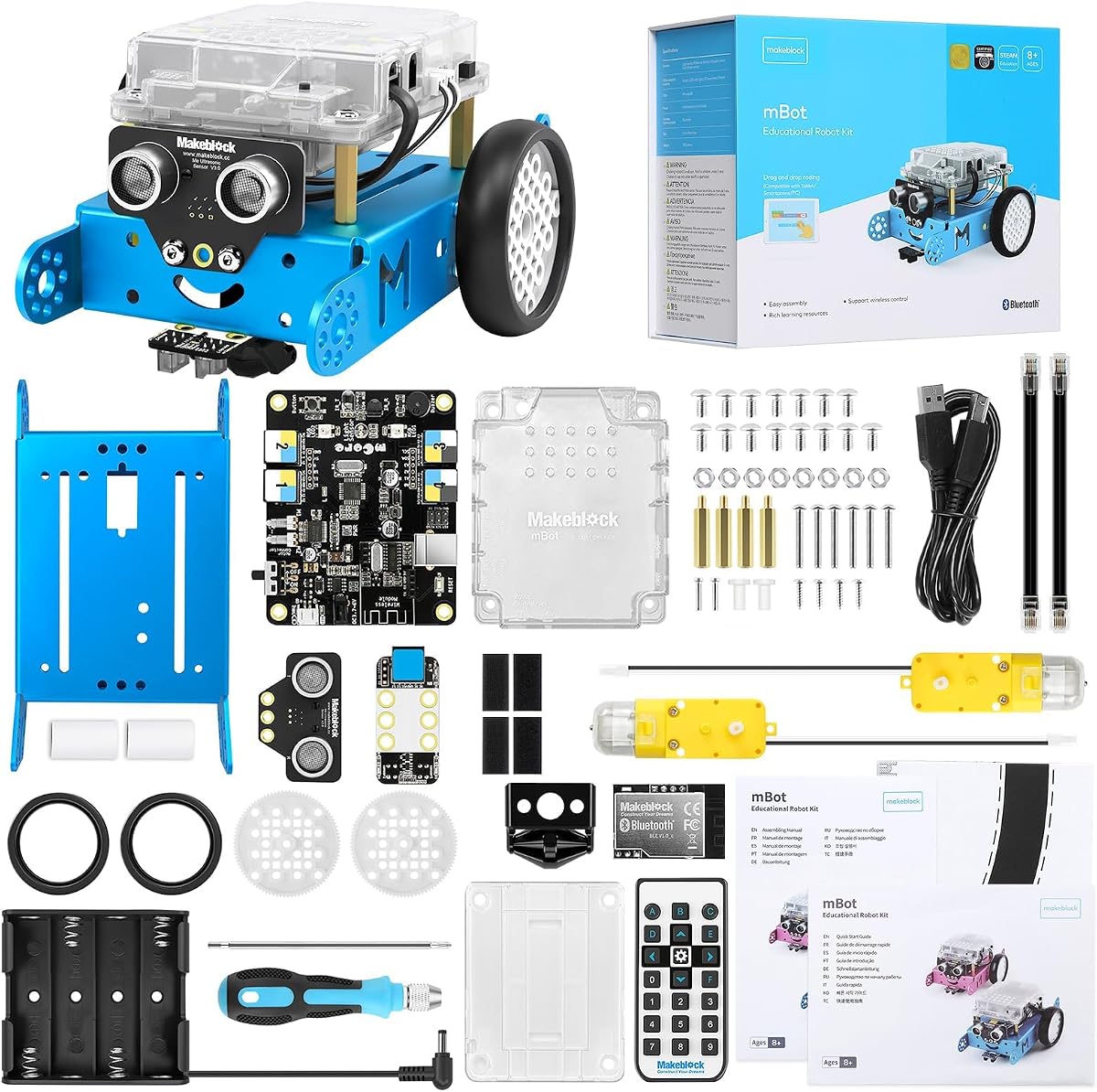
The Makeblock mBot is a top-rated entry-level coding robot designed for kids ages eight to twelve. It combines electronics, robotics, and programming into a simple yet powerful learning experience with a 4.6 star rating.
We may earn a commission when you buy through this link, at no additional cost to you.
Children can build the robot in under fifteen minutes using clear instructions, then dive into coding via Scratch or Arduino interfaces. The open-source system supports rich add-on packs and thousands of compatible parts for creativity.
Note that batteries are not included, which is a common omission in this category. The kit's focus on step-by-step learning and interactive software ensures steady progress for emerging programmers at home or school.
This robot is an outstanding choice for families wanting a versatile STEM project. Its balance of easy assembly, advanced coding potential, and compatibility with existing toys makes it a standout educational tool.
From Scratch to Arduino, the mBot provides structured resources that guide kids through programming concepts gradually.
Compatible with 100+ modules and LEGO parts, the mBot grows with your child's skills and interests over time.
We may earn a commission when you buy through this link, at no additional cost to you.
The Sphero Mini packs a ton of fun into a tiny programmable ball the size of a ping pong ball. With a 4.6 star rating, it offers beginner-friendly coding and gaming experiences through Bluetooth connectivity and mobile apps.
We may earn a commission when you buy through this link, at no additional cost to you.
Kids can learn to code by drawing on a screen, using drag-and-drop blocks, or writing JavaScript via the free Sphero Edu app. Drive modes like Joystick and Tilt turn the robot into an interactive toy for play.
Battery life is limited to about one hour, but this fits well with typical learning sessions. The included cones and bowling pins enable immediate obstacle course fun, making setup fast and engaging for new users.
This ball is perfect for tech-savvy kids who enjoy gaming and coding. It inspires creativity through hands-on learning and is a great introduction to robotics for beginners seeking a modern, app-connected experience.
Choose from drawing, drag-and-drop, or JavaScript to match your child's skill level and learning preferences.
Use the Mini as a game controller in arcade-style games, blending entertainment with STEM learning seamlessly.
We may earn a commission when you buy through this link, at no additional cost to you.
The Learning Resources Code & Go Robot Mouse Set supports early learners with screen-free coding and problem-solving activities. It holds a 4.5 star rating for its focus on sequencing and logic through hands-on robot programming.
We may earn a commission when you buy through this link, at no additional cost to you.
Kids use coding cards to program Colby the mouse to navigate mazes, building confidence through trial and error. The set includes 16 maze grids, walls, tunnels, and activity cards ideal for rotations or small-group work.
While batteries are not included, the activity set provides enough variety to sustain interest across multiple sessions. Its focus on early programming concepts makes it a strong introduction to robotics for ages four and up.
This mouse is perfect for preschoolers and early elementary students starting their coding journey. It emphasizes critical thinking and sequencing in a simple, tactile format suitable for home or classroom environments.
Children strengthen directional understanding and logic as they program the mouse to solve mazes step by step.
The repeatable maze grid system makes it easy for teachers and parents to set up structured STEM activities.
We may earn a commission when you buy through this link, at no additional cost to you.
The TEACH TECH Mech-5 is a unique mechanical coding robot kit designed to inspire future engineers ages ten and up. It combines building and coding to teach mechanical principles through interactive challenges like throwing, lifting, and drawing.
We may earn a commission when you buy through this link, at no additional cost to you.
Kids snap coding buttons onto a coding wheel to control the robot, then watch it move based on their sequences. The kit is a true STEM project, requiring multiple hours of assembly to fully experience its capabilities.
The detailed step-by-step instructions ensure proper assembly, which is essential for the robot to function as intended. This focus on depth over simplicity makes it ideal for older children ready for a more involved engineering challenge.
This kit is best for kids seeking a serious building and coding experience. It balances mechanical engineering lessons with functional coding, providing a rich environment for learning by doing and exploring robotics principles.
The in-depth build process teaches patience and technical skills essential for understanding mechanical systems.
Coding buttons on the wheel control real-world actions like lifting and kicking, making abstract concepts concrete.
We may earn a commission when you buy through this link, at no additional cost to you.
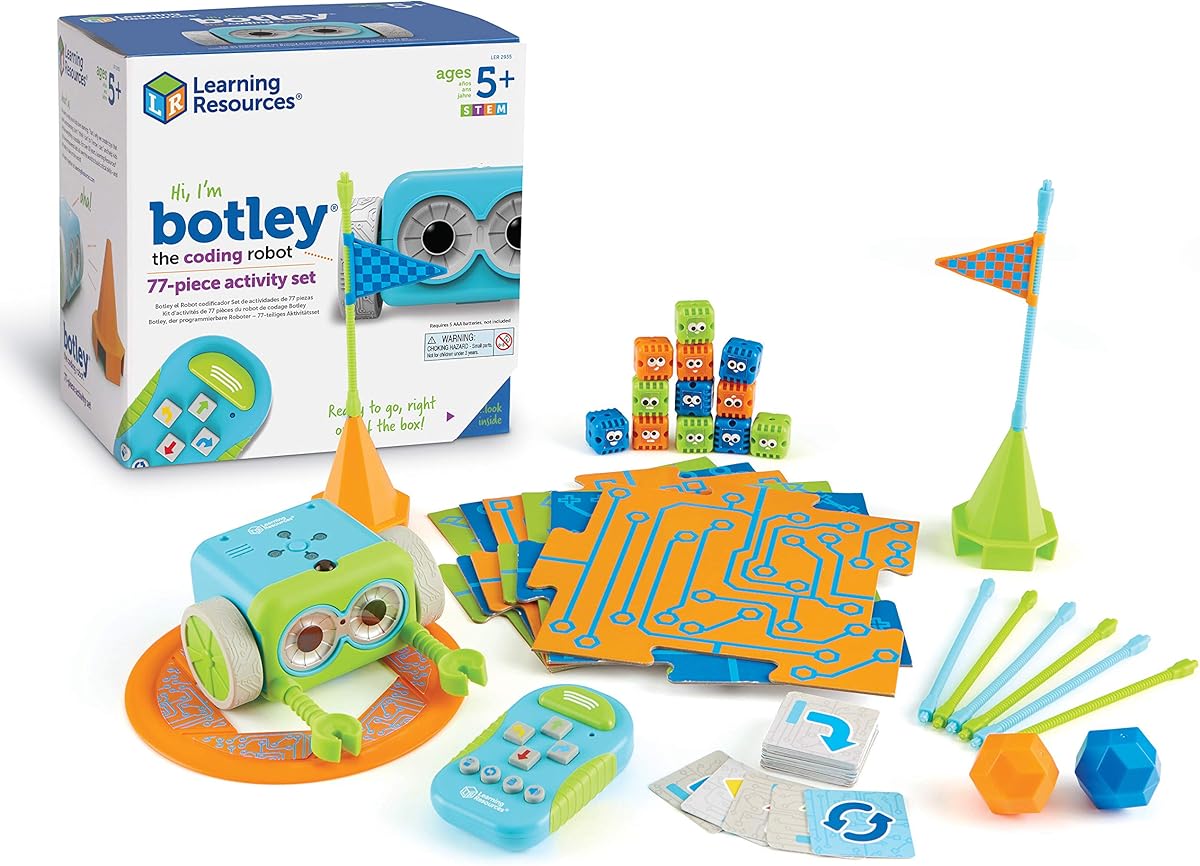
The Learning Resources Botley Coding Robot Set promotes early STEM skills through active, screen-free play. It receives a 4.6 star rating for its ability to teach critical thinking and problem-solving via coding games and creativity.
We may earn a commission when you buy through this link, at no additional cost to you.
Botley features an easy-to-use remote programmer and object detection that allows it to avoid obstacles. The 77-piece set includes detachable arms, coding cards, and obstacle pieces to create custom mazes and stories.
Setup requires batteries and a Phillips screwdriver, which are not included but make the initial setup straightforward. Once ready, kids can code looping commands and follow black-line paths without needing any electronic devices.
This robot is perfect for families wanting a completely screen-free coding experience. Its logic-based programming and creative expansion possibilities make it a versatile and engaging tool for young learners.
Commands are sent via a dedicated programmer, keeping play focused on logic rather than digital interfaces.
Botley detects and avoids objects, teaching kids how robots interact with their environment safely.
We may earn a commission when you buy through this link, at no additional cost to you.
The Ozobot Evo Entry Kit introduces children to coding through both online Blockly and screen-free Color Codes. With a 4.6 star rating, it offers five skill levels and access to over 700 free lessons covering STEAM subjects.
We may earn a commission when you buy through this link, at no additional cost to you.
The Evo robot is durable enough for classroom use and comes with markers in a hard case for organization. Beginners can start with color-coded paths, while more advanced learners can transition to app-based coding for complexity.
The kit grows with the child's abilities, making it a long-term investment compared to simpler toys. Its comprehensive resources and adaptability ensure sustained engagement across different age groups and skill ranges.
This kit is ideal for educators or families wanting a deep educational experience. Its combination of physical and digital learning tools provides a robust foundation for coding and critical thinking skills.
Choose between screen-free color codes or online Blockly to match your child's learning style and environment.
Over 700 free lessons support diverse subjects, ensuring endless possibilities for learning and exploration.
We may earn a commission when you buy through this link, at no additional cost to you.
The Learning Resources Botley 2.0 introduces early coding ideas through cause-and-effect actions with a simple remote. It maintains a 4.5 star rating for its focus on building logic and sequencing skills via coding cards and challenges.
We may earn a commission when you buy through this link, at no additional cost to you.
As kids advance, the robot supports multi-step paths, 45-degree turns, and object-sensing reactions that encourage complex problem-solving. The 78-piece kit includes boards, obstacle pieces, and secret code combinations for open-ended play.
Lights, sounds, and playful music make coding options engaging and multisensory. While setup requires batteries, the robot offers enough depth to grow with your child's skills from early coding to more advanced logic puzzles.
This set is perfect for young creators who enjoy open-ended challenges. It balances easy entry with advanced features, ensuring long-term engagement and steady learning progress for early coders.
Multi-step paths and object reactions encourage kids to refine strategies and tackle complex problems.
Lights and sounds add fun to learning, making coding feel more like a creative game than a lesson.
We may earn a commission when you buy through this link, at no additional cost to you.
The Wonder Workshop Dash Robot is designed for kids ages six to eleven and offers a STEM advantage right out of the box. With a 4.6 star rating, it teaches coding concepts like loops and variables through hands-on play and challenges.
We may earn a commission when you buy through this link, at no additional cost to you.
Dash can sing, dance, navigate obstacles, and respond to voice commands. It uses five apps including Blockly and Wonder for coding on iOS, Android, and Fire OS devices, making learning accessible on most tablets.
Battery life supports up to five hours of active play, which is generous for this class of robot. The absence of a camera keeps privacy simple, and included USB charging cables make maintenance straightforward.
This robot is ideal for classrooms and families seeking app-based learning. Its proven use in schools and engaging interactive features ensure consistent quality and educational value for young learners.
Choose from Blockly, Wonder, and Path apps to match your child's preferred coding method and skill level.
Up to five hours of play time ensures Dash can handle extended learning sessions without frequent recharging.
We may earn a commission when you buy through this link, at no additional cost to you.
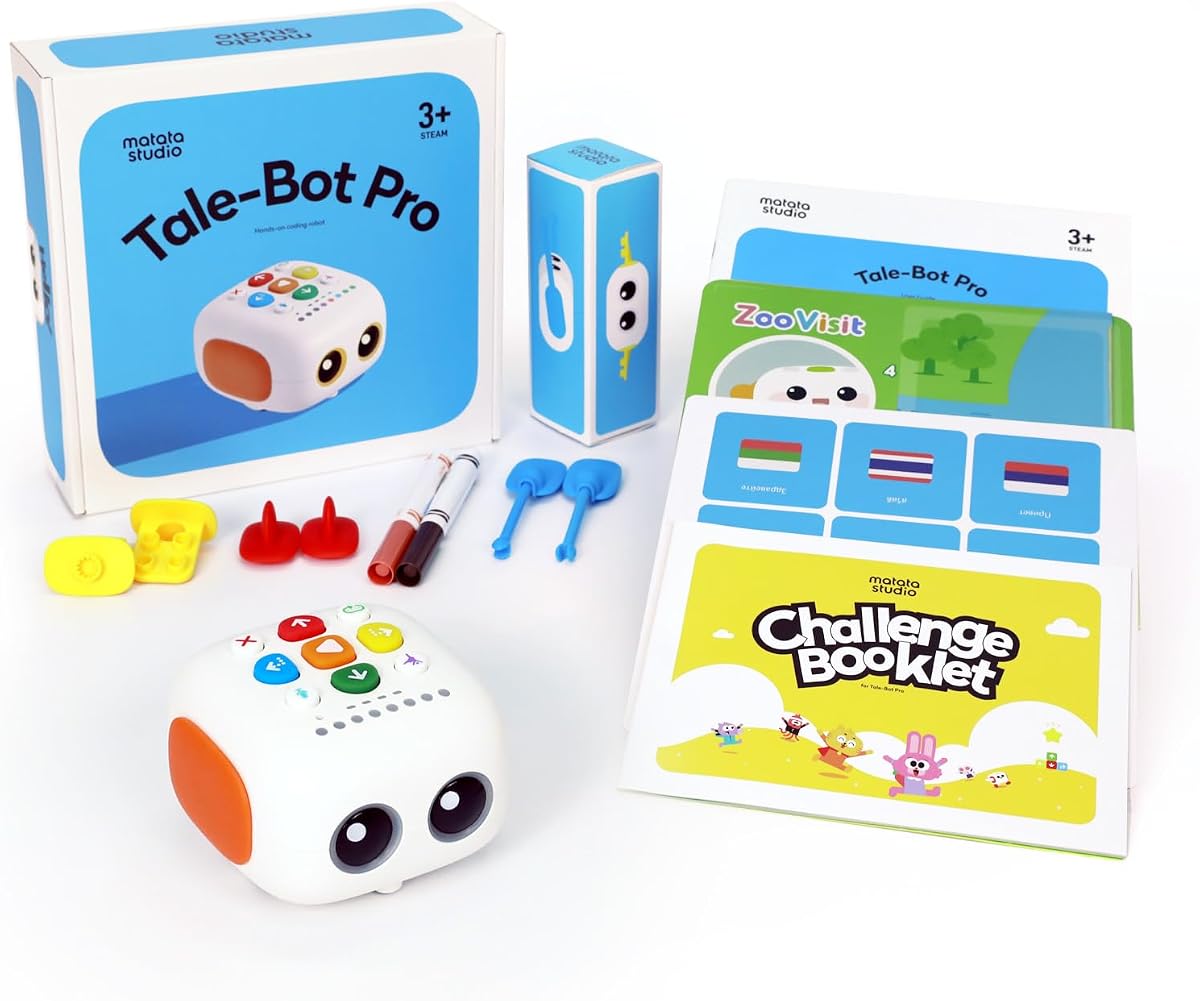
The TaleBot Pro offers an interactive learning experience for toddlers ages three to five through a screen-free STEM toy. It holds a 4.7 star rating for combining coding basics with storytelling and rich voice feedback.
We may earn a commission when you buy through this link, at no additional cost to you.
Kids press command buttons to make TaleBot walk, draw, sing, and speak, learning commands, sequences, and loops. The robot includes a double-sided interactive map and supports 10 languages, making it versatile for diverse households.
Recording voice commands and imaginative tales helps expand creativity and language skills. Its touch-based controls make it safe and accessible for autistic children, fostering cognitive and communication development through multi-sensory play.
This robot is perfect for preschoolers beginning their coding journey. Its focus on storytelling and language development makes it a unique and educational tool that grows with your child's early learning needs.
Immediate voice feedback helps kids understand cause and effect, reinforcing learning during play.
The ability to record stories encourages language development and lets children bring their ideas to life.
We may earn a commission when you buy through this link, at no additional cost to you.
Selecting the right coding toy depends on age, learning goals, and budget. This guide outlines key factors to consider to find the best match for your child.
Coding toys vary widely by complexity. Toddlers benefit from simple button presses and visual cues, while older kids can handle detailed assembly and logic-based programming interfaces.
Always check the manufacturer's age recommendations to ensure safety and engagement.
Some coding robots operate without screens using physical cards or remotes, which is ideal for limiting screen time. Others require tablet or smartphone apps for advanced coding features and customization.
Consider your family's screen time policies before making a purchase.
Some kits are pre-assembled and ready out of the box, while others require construction that teaches engineering skills. Complex builds offer deeper learning but may need adult help.
Choose based on how much hands-on building time your child enjoys.
Children learn differently; some prefer visual coding blocks, others enjoy physical paths or voice commands. Aligning the robot's interface with your child's style ensures better engagement.
Look for toys that offer multiple modes to suit different preferences.
Robots that work with add-ons or other blocks like LEGO can grow with your child's interests. Modular systems allow for more complex projects over time.
Invest in platforms with strong accessory ecosystems for long-term value.
Most robots require batteries that are not included. Some use standard AA or AAA batteries, while others have built-in rechargeable packs.
Check power needs and availability to avoid delays in starting play.
Many coding toys come with lesson plans, activity cards, or online tutorials. Comprehensive resources help parents and teachers facilitate learning without needing coding expertise.
Prioritize products with clear guides for structured educational play.
Classroom or shared toys need to withstand regular use. Sturdy construction and organized storage cases help prolong a robot's life.
Opt for designs that are rugged and include storage solutions.
Start by reading the included manual and assembling any required parts with adult supervision. Ensure batteries are installed correctly before attempting to power on the robot.
Begin with basic challenges like simple sequences or obstacle navigation. Gradually increase complexity as your child becomes comfortable with coding concepts and the robot's functions.
Store pieces in a dedicated container after each session to prevent loss. Clean sensors and buttons with a dry cloth to maintain responsiveness and extend the toy's life.
Yes, many coding toys use playful themes like pets, animals, or games to engage children. They introduce logic and problem-solving without feeling like traditional tech lessons.
No, most coding robots include beginner guides and tutorials. Physical cards or visual interfaces make it easy to teach basics without prior programming knowledge.
Simple coding toys are available for toddlers as young as three. However, most detailed kits are designed for kids aged five to eight and older.
Screen-free options encourage tactile learning and reduce eye strain. They are great for younger kids or families wanting to limit digital device time.
Quality robots can last several years with care. Battery life per session varies, but rechargeable models can offer longer play times.
Yes, many kits support collaborative play with multiple accessories. Shared activities promote teamwork and social learning skills.
Look for toys with expandable features or diverse challenges. Adjustable difficulty keeps the experience fresh as skills grow.
Many robots offer predictable, touch-based interactions that reduce stress. Visual feedback and structured play can aid communication and cognitive development.
From screen-free robots to app-enabled kits, this guide highlights top options for all ages and budgets. Each pick balances fun with educational value to inspire young coders.
Prioritize toys that match your child's learning style and your family's screen time preferences. Consider expandability to ensure the toy remains engaging as skills progress.
Check current availability and pricing before buying, as these can change over time. With the right choice, coding toys can spark a lifelong interest in technology and engineering.