
Epson LQ-590II
4.3Editor score
24-pin resolution
USB and Parallel ports
High-speed mono printing
This guide compares the top Dot Matrix Computer Printers available in October 2026 based on speed, reliability, connectivity, and overall value for office and
Dot matrix computer printers remain essential for businesses needing multi-part forms, carbon copies, and rugged durability. These impact printers excel in high-volume environments where reliability matters more than quiet operation or color graphics.
We evaluated ten leading models from Epson and OKI based on print speed, pin count, connectivity options, and duty cycle ratings. Our analysis focuses on real-world performance metrics that matter most to operational teams and procurement managers.
Each product listing highlights key specifications, user ratings, and unique features to help you make an informed decision. Prices and availability change frequently, so verify current details before purchasing to ensure you get the best value.
4.3Editor score

4.7Editor score

4.8Editor score
The following table provides a side-by-side comparison of all ten models, highlighting critical specifications to help you quickly identify the right fit for your specific printing needs and budget constraints.
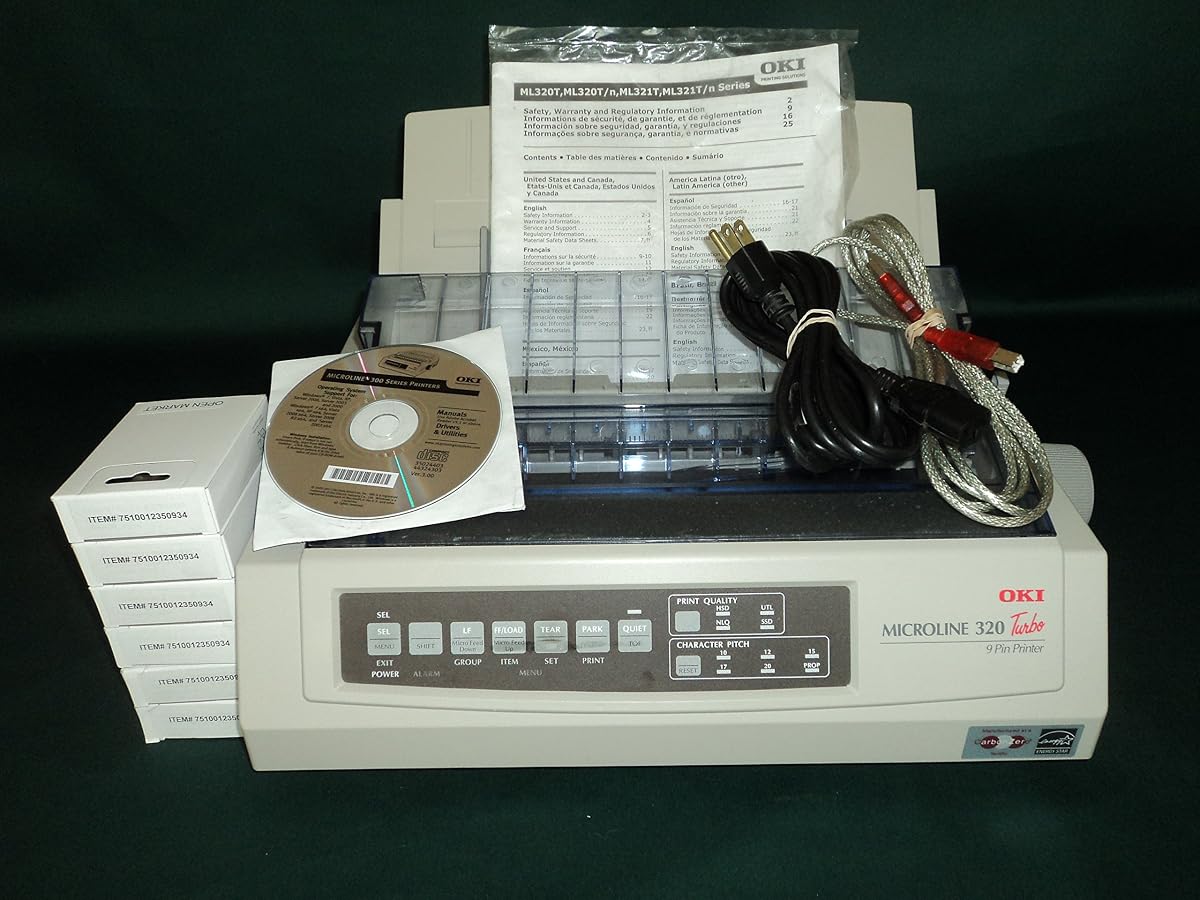


This model earns the Editor's Choice badge for its exceptional balance of speed and reliability. With a 4.7 rating from users, it stands out as the most trusted option for high-volume dot matrix printing tasks.
We may earn a commission when you buy through this link, at no additional cost to you.
The 9-pin dot matrix system delivers up to 435 characters per second in SuperSpeed Draft mode. Its zero-tear and auto-park technology ensures paper feeds correctly, minimizing waste and downtime during critical operations.
While it is more expensive than basic models, the ability to print up to six interleaf or carbonless copies justifies the investment. The monthly duty cycle of 20,000 pages handles heavy workloads without strain.
Buyers seeking consistent performance in inventory, logistics, or accounting departments should prioritize this printer. Its robust design and fast feed rate make it the top choice for professional environments.
The SuperSpeed Draft mode maximizes throughput for internal documents where perfect quality is less critical than speed.
Print up to six carbonless copies simultaneously for invoices and forms requiring multiple party signatures.
We may earn a commission when you buy through this link, at no additional cost to you.
The Epson LQ-590II offers excellent value for businesses needing reliable monochrome printing without breaking the bank. Its 4.3 rating reflects consistent satisfaction among users who prioritize speed and affordability.
We may earn a commission when you buy through this link, at no additional cost to you.
With a maximum mono print speed of 584 characters per second, it handles large batches efficiently. The 24-pin technology ensures sharper text compared to older 9-pin models, improving readability for invoices and reports.
Connectivity options include both USB and Parallel ports, allowing flexible integration with legacy systems or modern computers. This dual support makes it adaptable to various office setups without requiring extra adapters.
Small businesses or departments needing simple, fast text output will find this model ideal. It balances performance and cost effectively, making it the best budget option in our roundup.
24-pin dots create smoother characters and better quality than 9-pin systems for professional documents.
Choose between USB for modern PCs or Parallel for legacy machines to match your existing infrastructure.
We may earn a commission when you buy through this link, at no additional cost to you.
With a stellar 4.8 rating, the Oki Microline 620 represents the pinnacle of dot matrix performance. It is designed for organizations where downtime is unacceptable and print quality must remain sharp under pressure.
We may earn a commission when you buy through this link, at no additional cost to you.
The printer delivers precise, sharp printing even at high volumes. Its simplified media loading reduces operator frustration, allowing staff to focus on core tasks rather than troubleshooting paper jams.
Reliable performance is the core promise here. While it comes at a premium cost, the long-term savings from reduced maintenance and higher uptime make it a smart investment for mission-critical applications.
Choose this model if you manage a high-traffic environment like a warehouse or legal office. Its robust build and intuitive design ensure it handles the toughest daily demands without fail.
Sharp, precise printing ensures documents are legible and professional for client-facing materials.
Simplified loading mechanisms reduce setup time and prevent jams caused by improper feed.
We may earn a commission when you buy through this link, at no additional cost to you.
This model provides a solid foundation for basic dot matrix needs with a 4.5 rating. It includes standard features that many legacy systems still require for seamless integration into existing workflows.
We may earn a commission when you buy through this link, at no additional cost to you.
The 435 cpm speed is adequate for most administrative tasks. With 64 KB of memory and a 240 x 216 dpi resolution, it ensures clear output for receipts and simple forms without excessive processing delays.
It supports both USB and Parallel connections, offering flexibility for mixed environments. The monthly duty cycle of 20,000 pages ensures it can handle steady use without overheating or needing frequent breaks.
For offices maintaining older infrastructure, this printer remains a reliable choice. Its straightforward design and proven durability make it a safe bet for steady, everyday printing needs.
64 KB memory helps manage data flow smoothly, reducing lag when processing larger print jobs.
240 x 216 dpi offers clear enough text for standard business documentation and forms.
We may earn a commission when you buy through this link, at no additional cost to you.
The OKI MICROLINE 420 boosts performance with faster speeds and more memory. Its 4.5 rating reflects satisfaction among users who need extra capacity for demanding print schedules without compromising on quality.
We may earn a commission when you buy through this link, at no additional cost to you.
At 570 cps, it outpaces many competitors in the 9-pin category. The 128 KB buffer allows smoother handling of complex jobs, while the 24,000 page duty cycle supports higher volume demands effectively.
Energy Star certification helps manage operating costs over time. Despite its larger footprint, the increased capacity makes it suitable for departments running continuous shifts or large batch processing tasks.
Organizations needing a balance of speed and efficiency will appreciate this model. It provides the extra power required for growing businesses while maintaining energy-conscious operations.
570 cps ensures rapid printing for time-sensitive documents and high-volume order lists.
Withstands 24,000 pages monthly, perfect for departments with heavy daily printing loads.
We may earn a commission when you buy through this link, at no additional cost to you.
With a rare perfect 5.0 rating, this variant of the 320 Turbo excels in user satisfaction. It combines speed and versatility in a compact form that fits well in smaller office spaces.
We may earn a commission when you buy through this link, at no additional cost to you.
It supports Serial, Parallel, and USB connections, making it extremely adaptable to different network configurations. The feed rate of 5 inches per second ensures quick document handling without frequent reloading.
The 20,000 page monthly duty cycle is robust enough for steady office use. Its reliable performance means fewer support calls and less downtime, which is crucial for small business continuity.
If you need a printer that just works without fuss, this is an excellent choice. Its adaptability and perfect user feedback make it a strong contender for versatile environments.
Supports Serial, Parallel, and USB for maximum compatibility with various computer systems.
5 inches per second feed rate keeps documents moving quickly through the printer.
We may earn a commission when you buy through this link, at no additional cost to you.
The Epson LQ-2090II is a workhorse designed for high-volume tasks. Although the 3.7 rating suggests some user challenges, its specs remain attractive for those prioritizing speed and efficiency over modern features.
We may earn a commission when you buy through this link, at no additional cost to you.
It achieves a maximum mono print speed of 550 characters per second, which is excellent for bulk printing. The 24-pin technology ensures text remains readable and professional even in draft modes.
Energy Star certification helps reduce power consumption during idle times. However, reliance on a parallel port might limit compatibility with newer computers without using additional bridges or adapters.
This model suits legacy environments where speed is paramount. If your workflow depends on fast text output and you have existing parallel interfaces, it remains a capable option.
550 cps speed accelerates production of large document batches quickly and efficiently.
Low power consumption helps reduce operational costs and environmental impact significantly.
We may earn a commission when you buy through this link, at no additional cost to you.
This version of the 320 Turbo adds valuable features like auto-park and zero-tear technology. With a 4.2 rating, it appeals to users who value reduced waste and streamlined operation in busy settings.
We may earn a commission when you buy through this link, at no additional cost to you.
The feed rate of 5 inches per second ensures smooth paper handling. Support for Epson, IBM, and ANSI emulations makes it versatile for software that requires specific command sets to function correctly.
It can produce up to six interleaf or carbonless copies, ideal for invoices. The rear push standard tractor ensures consistent feed, minimizing manual adjustments and saving valuable operator time.
Departments dealing with forms and invoices will benefit from these features. It bridges the gap between speed and operational efficiency with thoughtful mechanical design improvements.
Automatically parks paper correctly to save time and reduce waste during batch printing.
Supports multiple emulation standards to work seamlessly with diverse legacy software.
We may earn a commission when you buy through this link, at no additional cost to you.
This listing highlights the Oki Microline 620's focus on high-volume versatility. With a 4.8 rating, it proves its worth in environments where reliability and consistent quality are non-negotiable priorities for teams.
We may earn a commission when you buy through this link, at no additional cost to you.
The printer delivers precise, sharp printing that maintains clarity even in demanding conditions. Its simplified media loading allows staff to reload paper quickly without frustration or technical difficulties.
Reliable performance ensures that daily operations are not interrupted by hardware failures. While it is a premium investment, the reduction in errors and downtime justifies the expense for busy teams.
Ideal for warehouses or distribution centers, this model handles heavy loads with ease. Its durable design supports continuous operation, keeping your business moving smoothly every day.
Handles diverse high-volume tasks with consistent speed and output quality reliably.
Simplified loading reduces downtime, allowing staff to refocus on core business activities.
We may earn a commission when you buy through this link, at no additional cost to you.
The Epson LQ-590 provides straightforward connectivity with USB support for modern PCs. Its 3.7 rating indicates functional performance, though users may find its feature set basic compared to newer models.
We may earn a commission when you buy through this link, at no additional cost to you.
It supports ESC/P, IBM PPDS, and other emulations, making it adaptable for legacy systems requiring specific command protocols. The 24-pin matrix ensures legible text for standard business documents and forms.
USB connectivity simplifies setup without needing extra cables or adapters. While it lacks advanced features, its reliability and compatibility make it a practical choice for small offices with limited budgets.
For basic printing needs requiring multi-part forms, this model serves well. It offers a balance of simplicity and functionality for users who do not need high-end speed.
Direct USB connection makes installation faster and easier for modern computers without extra hardware.
Multiple emulation options ensure compatibility with various existing software systems and drivers.
We may earn a commission when you buy through this link, at no additional cost to you.
Selecting the right dot matrix printer requires evaluating speed, duty cycle, connectivity, and emulation support. This guide breaks down critical factors to help you find the ideal model for your operational needs.
Print speed determines how fast your printer can output characters or lines. Higher speeds like 584 cps or 570 cps reduce wait times for large documents, while slower models may suit light usage.
Prioritize higher speeds if you handle bulk invoices or reports daily. For occasional use, moderate speed saves costs without impacting workflow significantly.
24-pin printers produce sharper text than 9-pin models due to more dots per character. If document quality matters to clients or compliance, choose a 24-pin option for better resolution.
9-pin printers are faster and cheaper but have coarser output. Match pin count to your quality standards and budget constraints.
Options include USB for modern PCs, Parallel for legacy systems, and Serial for industrial setups. Ensure the printer supports your current computer ports to avoid extra adapter costs or configuration issues.
USB is standard today, but legacy systems may need Parallel or Serial. Verify available ports before buying.
The monthly duty cycle shows how many pages the printer can handle reliably without overheating. Models with 20,000 to 24,000 pages are ideal for heavy departments like warehouses or finance.
Higher duty cycles prevent burnout and extend the machine's lifespan. Choose accordingly to your daily volume.
Printers support different command languages like Epson, IBM, or ANSI. Ensure your software recognizes the printer's emulation to avoid compatibility problems or print errors.
Multi-emulation support offers flexibility if you run multiple legacy applications. Confirm requirements before purchase.
If you need carbonless copies, verify the number of layers the printer can produce. Most support up to five or six copies, which is standard for invoices and contracts.
Check this feature if you still rely on physical copies for compliance or archival purposes.
Energy Star certification reduces power usage during operation and idle times. While not critical, it lowers operational costs over the device's lifespan.
Look for certified models if you run many units or aim for green operations.
Rear push tractors ensure paper feeds smoothly, reducing jams. Auto-park and zero-tear tech minimize waste and simplify reloading for staff.
Choose models with robust feed systems to keep operations uninterrupted and avoid frustration.
Install drivers matching your computer's OS and emulation requirements. Connect cables securely and ensure paper is aligned with the tractor feed to prevent skewing during printing.
Regularly clean the print head and platen to remove dust or ink residue. Use a soft cloth and recommended cleaning solutions to maintain clarity and prevent clogs over time.
Load paper carefully, adjusting tension to avoid tearing. Replace ribbons when print quality fades and store spare parts like paper rolls in dry areas to prevent damage.
Yes, they remain essential for businesses needing carbon copies and durable multi-part forms. They excel in logistics and manufacturing where impact printing is still required for compliance.
24-pin printers produce sharper text and better resolution than 9-pin models. While 9-pin offers faster speeds, 24-pin is better for professional documents requiring clarity.
Yes, many models offer USB connections. If only Parallel or Serial is available, use adapters to connect to modern systems without hardware changes.
Ribbons should be replaced when print quality fades, typically after 5,000 to 10,000 pages depending on usage. Regular checks prevent sudden failures in critical tasks.
For standard office workloads, a 20,000 page monthly cycle is sufficient. High-volume departments should consider 24,000 pages to avoid overheating or downtime issues.
Most models listed are monochrome only. Dot matrix technology focuses on durability and multi-part forms rather than full color graphics.
Yes, impact printers generate significant noise due to the mechanical process. They are best placed in dedicated areas to minimize disruption in quiet offices.
Check for misaligned paper or excessive tension on the tractor feed. Clean rollers and ensure paper width matches the printer's settings to prevent recurring jams.
Our top picks include the Oki Microline 320 Turbo/N for overall performance, the Epson LQ-590II for budget-conscious buyers, and the Oki Microline 620 for premium reliability.
Focus on speed, pin count, and connectivity to match your specific workflow. Higher duty cycles and emulation support ensure long-term viability for demanding environments.
Prices and availability change frequently. Verify current deals and specs before purchasing to ensure you secure the best value for your business needs.