
ASUS Dual Radeon RX 9060 XT
4.7Editor score
Affordable performance for 1080p gaming
Efficient cooling with Axial-tech fans
Dual BIOS for quiet or performance modes
This guide compares the top ten graphics cards for ray tracing performance across price points to help gamers and creators find the ideal GPU for immersive
Graphics cards for ray tracing have transformed how we experience digital worlds. By simulating realistic light behavior these GPUs deliver lifelike reflections shadows and global illumination. Choosing the right card means balancing performance with your display resolution and budget.
We evaluated ten leading models based on architecture cooling design memory specs and real-world rendering capabilities. Each entry represents a distinct value proposition ranging from budget-friendly options to high-end flagship solutions built for demanding workloads and AAA gaming.
Every pick below highlights specific strengths and ideal use cases so you can match hardware to your needs. Keep in mind that prices and availability fluctuate frequently so verify current listings before finalizing your purchase decision.
4.7Editor score

4.8Editor score

4.6Editor score
The following table provides a side-by-side overview of key specifications and features for all ten graphics cards featured in this guide to help you compare core capabilities at a glance.


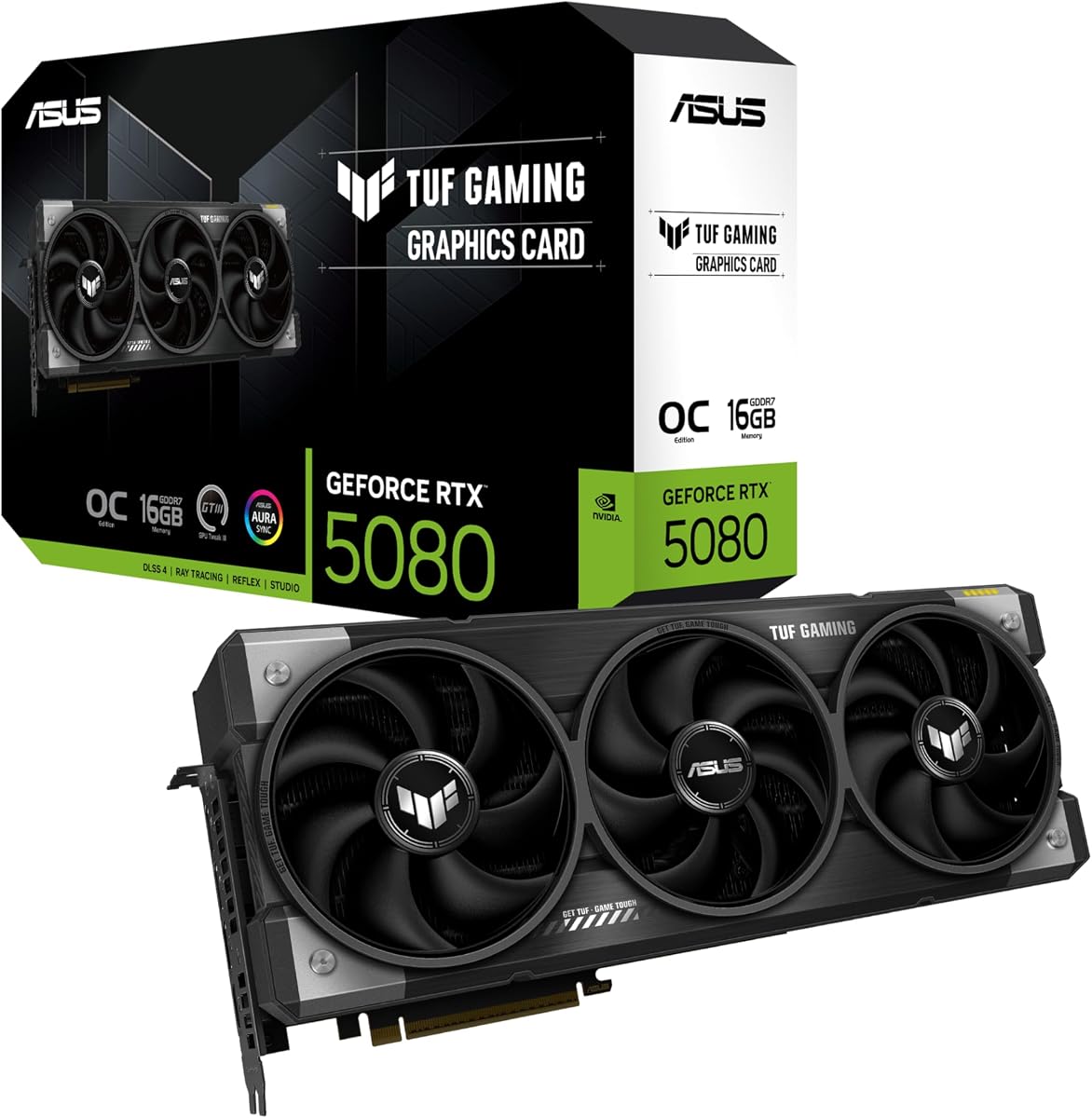


The ASUS TUF Gaming GeForce RTX 5080 stands as a top contender for enthusiasts seeking maximum performance. Its Blackwell architecture delivers unmatched rendering speeds for ray tracing tasks at 4K resolution.
We may earn a commission when you buy through this link, at no additional cost to you.
Military-grade components ensure the card maintains stable clock speeds even under sustained stress. The phase-change thermal pads improve heat dissipation which helps preserve efficiency during long gaming sessions.
While the power requirements and physical dimensions are demanding these trade-offs are expected for flagship hardware. The protective PCB coating adds resilience against environmental factors like dust or moisture.
If you prioritize raw frame rates and future-proof memory capacity this card is highly recommended. It remains the premier choice for those building a high-end workstation or gaming rig.
Phase-change thermal pads outlast traditional paste to ensure consistent cooling over years of use.
Military-grade parts and protective coatings provide reliability for demanding workloads and daily drivers.
We may earn a commission when you buy through this link, at no additional cost to you.
This GIGABYTE model offers flagship capabilities tailored for users who need the absolute best ray tracing capabilities. The WINDFORCE cooling system keeps temperatures low while pushing high clock speeds.
We may earn a commission when you buy through this link, at no additional cost to you.
With 16GB of GDDR7 memory you can handle heavy texture workloads and multi-monitor setups without bottlenecks. DLSS 4 support further enhances performance by intelligently scaling frames.
The cost is substantial which may be a barrier for casual users. However the performance per watt and thermal stability justify the investment for professional creators and competitive gamers.
Select this card if you want leading edge technology and maximum longevity. It represents a solid premium investment for future-proofed visual computing.
GDDR7 provides faster bandwidth for seamless rendering of complex scenes and high-resolution textures.
WINDFORCE design optimizes fan speed and airflow to reduce noise while maintaining peak efficiency.
We may earn a commission when you buy through this link, at no additional cost to you.
The RTX 5070 Ti delivers nearly flagship performance at a more accessible price tier. It uses the same Blackwell architecture to ensure modern features like DLSS 4 and advanced ray tracing.
We may earn a commission when you buy through this link, at no additional cost to you.
16GB of memory ensures you can run demanding titles at ultra settings without running into capacity limits. The protective PCB coating adds a layer of durability against common environmental risks.
Installation requires a compatible power supply with a 16-pin connector. While this is a standard now it is worth verifying your PSU before purchase.
This model is ideal for builders seeking high performance without the extreme cost of top-tier cards. It offers great longevity and robust build quality for daily gaming.
Military-grade components and automated manufacturing ensure consistent reliability across different usage scenarios.
High clock speeds and optimized airflow maintain stable frame rates during extended gaming sessions.
We may earn a commission when you buy through this link, at no additional cost to you.
The RTX 5070 brings Blackwell architecture to the mid-range market. It excels at 1440p gaming while supporting modern ray tracing features efficiently.
We may earn a commission when you buy through this link, at no additional cost to you.
Its 3.125-slot design makes it easier to fit in smaller cases compared to bulkier models. The included GPU Guard bracket helps secure the card and prevent sagging.
Performance is robust for most modern titles though heavy texture users may prefer more VRAM. The cooling system is well balanced for silence during light loads.
Buy this if you need high performance in a smaller footprint. It is a solid choice for balanced builds that prioritize value.
Design optimizes slot usage allowing for better compatibility with compact PC chassis.
GPU Guard bracket reduces mechanical stress ensuring the card remains secure over time.
We may earn a commission when you buy through this link, at no additional cost to you.
This GIGABYTE variant focuses on delivering reliable high clock speeds for gaming. The WINDFORCE system keeps heat in check allowing for consistent performance during matches.
We may earn a commission when you buy through this link, at no additional cost to you.
GDDR7 memory provides significant bandwidth advantages over older standards which helps in compute-heavy tasks. DLSS 4 support ensures smooth experiences in new titles.
The 12GB VRAM may be sufficient for 1080p and 1440p but limits ultra settings for 4K. However this is expected for mid-range cards in 2026.
Choose this card if you want a reliable gaming engine. It balances efficiency and power for most competitive and single-player experiences.
GDDR7 allows for rapid data transfer reducing bottlenecks in rendering pipelines.
OC Edition tuning ensures stable boost clocks without frequent throttling under load.
We may earn a commission when you buy through this link, at no additional cost to you.
This Radeon card delivers incredible value for 1440p gaming. The large memory buffer handles modern textures without issues allowing for smoother gameplay.
We may earn a commission when you buy through this link, at no additional cost to you.
WINDFORCE cooling ensures the card runs cool even during marathon sessions. It supports ray tracing efficiently though it may not match top-tier NVIDIA models in raw fidelity.
For gamers who prioritize frame rates over absolute ray tracing quality this is a strong contender. The price point makes it accessible for many builders.
Pick this if you want high performance without overspending. It remains a top choice for resolution-focused gaming experiences.
16GB of VRAM provides ample space for high resolution textures and large scene data.
Advanced thermal design keeps fans quiet while maintaining stable performance under pressure.
We may earn a commission when you buy through this link, at no additional cost to you.
The ASUS Prime model stands out for its whisper-quiet idle operation thanks to 0dB technology. It delivers solid gaming performance with efficient heat dissipation.
We may earn a commission when you buy through this link, at no additional cost to you.
Axial-tech fans feature a unique barrier ring to boost air pressure. This design maintains excellent cooling in smaller cases where space is limited.
The dual BIOS switch lets you choose between quiet and performance profiles. This flexibility is ideal for varied usage patterns like streaming or editing.
Buy this card if noise and compact size are priorities. It remains a reliable choice for high-end 1440p builds.
0dB technology keeps the card completely silent during non-intensive tasks for a quiet workspace.
Switch between Quiet and Performance modes to match your current application needs.
We may earn a commission when you buy through this link, at no additional cost to you.
This card offers entry-level access to Blackwell features at a reasonable cost. It delivers solid 1080p and 1440p performance for mainstream gamers.
We may earn a commission when you buy through this link, at no additional cost to you.
The 16GB memory buffer is unexpected for this class and helps future-proof your setup. DLSS 4 support ensures compatibility with upcoming optimization tools.
While not for ultra settings at 4K it handles most modern titles efficiently. The compact size makes it perfect for small form factor cases.
Choose this if you want modern features on a budget. It remains one of the best affordable options for 2026.
16GB buffer provides longevity and headroom for newer games requiring larger assets.
Lower power draw reduces energy bills and allows use with standard power supplies.
We may earn a commission when you buy through this link, at no additional cost to you.
The RX 9060 XT serves as an ideal entry point for builders. It offers reliable performance for eSports and mainstream titles without breaking the bank.
We may earn a commission when you buy through this link, at no additional cost to you.
0dB technology ensures silence during browsing or light use. The compact dual fan design fits easily into most cases.
While ray tracing performance is modest it is enough for basic lighting effects. It remains a stable choice for casual gaming.
Buy this if you need an affordable GPU for daily use. It delivers consistent value for budget-conscious users.
This model provides a low-cost entry to modern graphics features without unnecessary expense.
Designed for standard cases ensuring easy installation without major modifications.
We may earn a commission when you buy through this link, at no additional cost to you.
This ZOTAC model offers a compact alternative for smaller builds. It delivers impressive performance despite its smaller physical footprint.
We may earn a commission when you buy through this link, at no additional cost to you.
IceStorm 2.0 cooling ensures thermal stability even when the case has restricted airflow. The metal backplate adds rigidity and heat dissipation.
While older than the Blackwell generation it still handles ray tracing effectively. DLSS 3 support ensures smooth frame rates.
Choose this if space is your primary constraint. It remains a viable option for compact gaming rigs needing reliable performance.
Twin Edge design fits in mini-ITX builds while maintaining strong output performance.
IceStorm technology maintains low temperatures even in restricted airflow environments.
We may earn a commission when you buy through this link, at no additional cost to you.
Selecting the right graphics card for ray tracing requires balancing architecture performance memory and budget. This guide breaks down the essential factors to consider.
Modern ray tracing relies heavily on specialized cores found in newer architectures. NVIDIA Blackwell and AMD Radeon 9000 series offer significant improvements in lighting simulation and rendering speed.
Always prioritize recent generations to ensure compatibility with new APIs and features like DLSS 4 or FSR.
Ray tracing loads textures and scene data into memory. Cards with 16GB VRAM handle high resolution textures better than 12GB models especially at 4K resolution.
For future-proofing aim for at least 16GB if you plan to play new AAA titles at ultra settings.
GDDR7 memory provides higher bandwidth than GDDR6 or X variants which reduces bottlenecks in ray tracing calculations. Faster memory helps maintain higher frame rates during complex lighting scenes.
Prefer GDDR7 models when available to ensure your card can handle increased data throughput.
High-performance cards often require robust power supplies with specific connectors. The new 12VHPWR connectors are common in Blackwell models and demand proper cable management.
Check your PSU wattage and connector types before buying to avoid compatibility issues.
Some flagship cards exceed three slots in width and nearly 350mm in length. Verify your case's GPU clearance to ensure the card fits without interfering with other components.
Compact designs like Twin Edge or 2.5-slot models help if you are building a small form factor PC.
Effective cooling ensures stable boost clocks. Models with phase-change thermal pads or axial-tech fans maintain performance under load better than basic designs.
Look for cards that mention advanced cooling technologies to ensure longevity.
Features like DLSS 4 or GPU Tweak software provide tools for performance tuning and image scaling. These tools help you get more frames without compromising visual fidelity.
Check if the card supports the latest software features relevant to your gaming platform.
Proper installation ensures stability and performance. Secure the card firmly in the PCIe slot and connect the power cables directly to the PSU without adapters.
Regular cleaning prevents dust accumulation which can degrade cooling. Use compressed air to clear fans and heatsinks every few months to maintain airflow.
Update your graphics drivers regularly to ensure compatibility with new games and ray tracing features. Keep your power supply settings optimized for peak performance.
The best cards for ray tracing in 2026 are those featuring the Blackwell architecture such as the RTX 5080 and RTX 5070 Ti. These models offer dedicated hardware cores for lighting calculations and support DLSS 4.
16GB VRAM is recommended for high resolution gaming with ray tracing enabled. It allows for larger textures and better performance in modern titles where lighting effects demand more memory.
Yes AMD RX 9000 series cards provide solid ray tracing performance for their price range. While NVIDIA often leads in raw fidelity AMD offers strong alternatives for high resolution gaming.
Most high-end models require at least 850W with a 12VHPWR connector. Always verify your PSU matches the specifications listed in the card details before purchase.
Use software like GPU Tweak or MSI Afterburner to track temperatures and fan speeds. These tools help ensure your card is not overheating during intense gaming sessions.
Yes these cards use standard PCIe slots but may require BIOS updates for full performance. Most modern motherboards support PCIe 5.0 which ensures compatibility.
This guide highlights the top options available in November 2026 ranging from budget-friendly choices to high-end flagship models. Each card offers unique strengths suited to different user needs.
Prioritize architecture and memory size when making your decision to ensure longevity. Cooling and case compatibility also play major roles in long-term satisfaction.
Always check current prices and availability since the market fluctuates frequently. With the right choice you can enjoy immersive ray tracing experiences for years to come.